The post Cooperativa Sociale Siloe appeared first on FoodSHIFT 2030.
]]>Bari, Italy
THE INNOVATION:
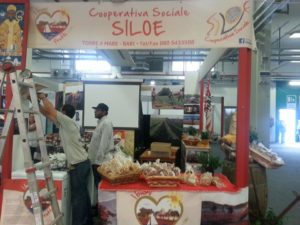
Siloe is a social cooperative founded in 2015 aimed at guaranteeing dignity to people with social problems and young people in difficulty
by employing them in farming activities. It produces different organic products such as olives, vegetables, processed agro-food products,
and it provides services of gardening and marketing of fresh and processed products. The main aim is thus to create economic independence through the production and sale of products. The adults in difficulty who work in the cooperative are hosted by the family house of Padre Dante, who is the head of the cooperative and also spiritually guides the recovery itself. The focus of the work is on social rehabilitation through work on field.
LOOKING AHEAD:
Siloe aims to continue it’s activities in supporting disadvantaged people, empowering them in their capacity to contribute to society (maturing).
More Information:
Website: www.siloeagricolturabiologica.it
Contact Person: Padre Dante Leonardi
Email: [email protected]
Info about the Innovators and the Innovation portraits Catalogue
FoodSHIFT 2030 aims to launch an ambitious citizen-driven transition of the European food system towards a low carbon circular future, including a shift to less meat and more plant based diets. This transition is necessary in order to address the pressing challenges for food and nutrition security, contribute to the EU commitment of reducing GHG emissions by at least 40% by 2030, and revitalize urban-rural linkages and partnerships.
To do so, it establishes FoodSHIFT Accelerator Labs for maturing, combining, upscaling and multiplying existing food system innovations across nine front-runner city-regions. In turn these innovations contribute to the FoodSHIFT vision.
An Innovation Catalogue called “Innovation Portraits” was created to snapshot each of the Food Innovations connected with each of the FoodSHIFT Accelerator Labs (FALs) across the 9 city regions.
Info about the Innovation Portraits Catalogue
The Innovation Catalogue will snapshot each of the Food Innovations connected with each of the FoodSHIFT Accelerator Labs (FALs) across the 9 city regions. Each FAL has a dedicated innovation focus and each chapter will present innovation cases from a particular FAL. For each of the innovations presented, a snapshot of the innovation concept and purpose will be given, alongside the key impacts the innovation has in relation to the FoodSHIFT Impact Pathways and the acceleration ambitions of the innovation.
In addition, each innovation portrait is also categorized according to its Innovation Dimension. These dimensions indicate what kind of innovation is being presented, and where in the value chain it plays a role. This is indicated by these tabs. The dimensions are defined as follows:
Product – Innovations in this category address new or updated products, including quality, safety and market impact.
Process – These innovations are relevant to new technologies for processing, logistical improvements, infrastructure and new/improved services.
Social – Innovations in this category are relevant to changes in behaviour (e.g. consumers/citizens), development of new relationships and inclusiveness.
Governance – The innovations address policy developments, including food planning, subsidies, taxing, certificates & labelling.
Learn more about all the Innovation portraits: https://foodshift2030.eu/meet-the-people-changing-your-food-system/
The post Cooperativa Sociale Siloe appeared first on FoodSHIFT 2030.
]]>The post Gaia Espirulina appeared first on FoodSHIFT 2030.
]]>Madrid, Spain
THE INNOVATION:
Gaia Espirulina aims to cultivate microalgae, specifically spirulina on rooftop terraces in the project’s local neighborhood in Madrid. Spirulina is a “superfood” for humans while its favorite food is CO2. It offers hopeful possibilities for capturing CO2 in large cities while releasing huge amounts of oxygen; something akin to having a rainforest over our heads while producing food with high nutritional qualities. The Gaia Espirulina team has developed a functioning bioreactor prototype to grow spirulina on rooftops, which proposes a better use for these underutilized areas while generating income for neighboring communities by renting out these spaces.
LOOKING AHEAD:
The next step is to test the bioreactor’s installation in a residential building, proving that adequate production can be reached with the proposed system. In addition, understanding how to address the community component of the initiative will be a vital next step in the innovation (maturing).

More Information:
Contact Person: Rubén Lopez Moreno
Email: [email protected]
Instagram: @gaiaespirulina
Info about the Innovators and the Innovation portraits Catalogue
FoodSHIFT 2030 aims to launch an ambitious citizen-driven transition of the European food system towards a low carbon circular future, including a shift to less meat and more plant based diets. This transition is necessary in order to address the pressing challenges for food and nutrition security, contribute to the EU commitment of reducing GHG emissions by at least 40% by 2030, and revitalize urban-rural linkages and partnerships.
To do so, it establishes FoodSHIFT Accelerator Labs for maturing, combining, upscaling and multiplying existing food system innovations across nine front-runner city-regions. In turn these innovations contribute to the FoodSHIFT vision.
An Innovation Catalogue called “Innovation Portraits” was created to snapshot each of the Food Innovations connected with each of the FoodSHIFT Accelerator Labs (FALs) across the 9 city regions.
Info about the Innovation Portraits Catalogue
The Innovation Catalogue will snapshot each of the Food Innovations connected with each of the FoodSHIFT Accelerator Labs (FALs) across the 9 city regions. Each FAL has a dedicated innovation focus and each chapter will present innovation cases from a particular FAL. For each of the innovations presented, a snapshot of the innovation concept and purpose will be given, alongside the key impacts the innovation has in relation to the FoodSHIFT Impact Pathways and the acceleration ambitions of the innovation.
In addition, each innovation portrait is also categorized according to its Innovation Dimension. These dimensions indicate what kind of innovation is being presented, and where in the value chain it plays a role. This is indicated by these tabs. The dimensions are defined as follows:
Product – Innovations in this category address new or updated products, including quality, safety and market impact.
Process – These innovations are relevant to new technologies for processing, logistical improvements, infrastructure and new/improved services.
Social – Innovations in this category are relevant to changes in behaviour (e.g. consumers/citizens), development of new relationships and inclusiveness.
Governance – The innovations address policy developments, including food planning, subsidies, taxing, certificates & labelling.
Learn more about all the Innovation portraits: https://foodshift2030.eu/meet-the-people-changing-your-food-system/
The post Gaia Espirulina appeared first on FoodSHIFT 2030.
]]>The post Local en Bocal appeared first on FoodSHIFT 2030.
]]>Avignon, France
THE INNOVATION:
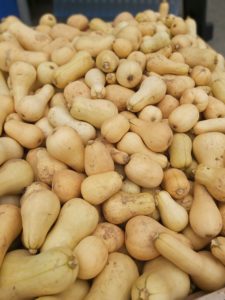
Local en Bocal focuses on the valorization of fruit and vegetable waste by processing and canning, resulting in higher value products such as soups. Local en Bocal makes use of organic, locally supplied fruit and vegetables that do not meet conventional standards, and processes them at their own facility which takes an inclusive approach to employment. This strategy has therefore two results streams: reduction and repurposing of food waste into high quality food products and facilitation of accessible employment opportunities in Avignon.
LOOKING AHEAD:
Local en Bocal is now looking to explore strategies for potential supply of two product streams: 1) for individual customers and 2) for public
stakeholders (maturing). This will also require the development of improved logistical strategies and the maintenance of good cooperation
between off-takers and local suppliers.
More Information:
Website: www.localenbocal.fr – www.a-cote.bio
Contact Person: Charlotte Trossat
Email: [email protected]
Info about the Innovators and the Innovation portraits Catalogue
FoodSHIFT 2030 aims to launch an ambitious citizen-driven transition of the European food system towards a low carbon circular future, including a shift to less meat and more plant based diets. This transition is necessary in order to address the pressing challenges for food and nutrition security, contribute to the EU commitment of reducing GHG emissions by at least 40% by 2030, and revitalize urban-rural linkages and partnerships.
To do so, it establishes FoodSHIFT Accelerator Labs for maturing, combining, upscaling and multiplying existing food system innovations across nine front-runner city-regions. In turn these innovations contribute to the FoodSHIFT vision.
An Innovation Catalogue called “Innovation Portraits” was created to snapshot each of the Food Innovations connected with each of the FoodSHIFT Accelerator Labs (FALs) across the 9 city regions.
Info about the Innovation Portraits Catalogue
The Innovation Catalogue will snapshot each of the Food Innovations connected with each of the FoodSHIFT Accelerator Labs (FALs) across the 9 city regions. Each FAL has a dedicated innovation focus and each chapter will present innovation cases from a particular FAL. For each of the innovations presented, a snapshot of the innovation concept and purpose will be given, alongside the key impacts the innovation has in relation to the FoodSHIFT Impact Pathways and the acceleration ambitions of the innovation.
In addition, each innovation portrait is also categorized according to its Innovation Dimension. These dimensions indicate what kind of innovation is being presented, and where in the value chain it plays a role. This is indicated by these tabs. The dimensions are defined as follows:
Product – Innovations in this category address new or updated products, including quality, safety and market impact.
Process – These innovations are relevant to new technologies for processing, logistical improvements, infrastructure and new/improved services.
Social – Innovations in this category are relevant to changes in behaviour (e.g. consumers/citizens), development of new relationships and inclusiveness.
Governance – The innovations address policy developments, including food planning, subsidies, taxing, certificates & labelling.
Learn more about all the Innovation portraits: https://foodshift2030.eu/meet-the-people-changing-your-food-system/
The post Local en Bocal appeared first on FoodSHIFT 2030.
]]>The post Les Jardins de Solène appeared first on FoodSHIFT 2030.
]]>Avignon, France
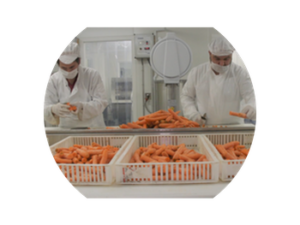
Les Jardins de Solène is a vegetable processing unit that recovers ‘ugly’ vegetables that do not meet conventional market standards. The initiative is driven by the founders will to fight against waste on two levels: Waste of fruits and vegetables in agricultural areas, and waste of human skills and capacity. Combining the two, Les Jardins de Solène provides long-term employment opportunities to people who are excluded from the traditional labor market, such as those with disabilities. Once the fruits and vegetables have been sorted and processed, they are sold to local organizations such as schools and hospitals. Les Jardins de Solène also provides coaching and support to employees as an inspiring example of social enterprise.
LOOKING AHEAD:
Les Jardins de Solène is now aiming to mature it’s logistics approach, exploring opportunities for a more efficient, collective strategy. In addition, improving the offer they can provide to public procurement will be essential in the long-term success of the initiative, as well as increasing awareness and understanding of food waste issues.
More Information:
Website: www.lesjardinsdesolene.com
Contact Person: Solène Espitalie
Email: [email protected]
Info about the Innovators and the Innovation portraits Catalogue
FoodSHIFT 2030 aims to launch an ambitious citizen-driven transition of the European food system towards a low carbon circular future, including a shift to less meat and more plant based diets. This transition is necessary in order to address the pressing challenges for food and nutrition security, contribute to the EU commitment of reducing GHG emissions by at least 40% by 2030, and revitalize urban-rural linkages and partnerships.
To do so, it establishes FoodSHIFT Accelerator Labs for maturing, combining, upscaling and multiplying existing food system innovations across nine front-runner city-regions. In turn these innovations contribute to the FoodSHIFT vision.
An Innovation Catalogue called “Innovation Portraits” was created to snapshot each of the Food Innovations connected with each of the FoodSHIFT Accelerator Labs (FALs) across the 9 city regions.
Info about the Innovation Portraits Catalogue
The Innovation Catalogue will snapshot each of the Food Innovations connected with each of the FoodSHIFT Accelerator Labs (FALs) across the 9 city regions. Each FAL has a dedicated innovation focus and each chapter will present innovation cases from a particular FAL. For each of the innovations presented, a snapshot of the innovation concept and purpose will be given, alongside the key impacts the innovation has in relation to the FoodSHIFT Impact Pathways and the acceleration ambitions of the innovation.
In addition, each innovation portrait is also categorized according to its Innovation Dimension. These dimensions indicate what kind of innovation is being presented, and where in the value chain it plays a role. This is indicated by these tabs. The dimensions are defined as follows:
Product – Innovations in this category address new or updated products, including quality, safety and market impact.
Process – These innovations are relevant to new technologies for processing, logistical improvements, infrastructure and new/improved services.
Social – Innovations in this category are relevant to changes in behaviour (e.g. consumers/citizens), development of new relationships and inclusiveness.
Governance – The innovations address policy developments, including food planning, subsidies, taxing, certificates & labelling.
Learn more about all the Innovation portraits: https://foodshift2030.eu/meet-the-people-changing-your-food-system/
The post Les Jardins de Solène appeared first on FoodSHIFT 2030.
]]>The post PROFESSIONALISATION OF SMALL PRODUCERS appeared first on FoodSHIFT 2030.
]]>Tinutul Barsei Local Action Group (LAG), Romania
THE INNOVATION:
Tinutul Barsei Local Action Group (LAG) covers Tinutul Barsei region, a unique region in Romania, with its own cultural and historical identity that has shaped the farming practices.
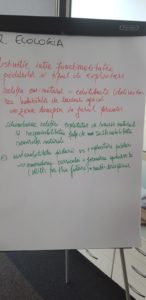
To preserve and promote these local traditions, the farmers are faced with a lot of challenges. One of the LAGs objectives is to assist local farmers in overcoming these challenges. The innovation consists of setting up courses for professionalising local farmers on diverse topics: fiscal matters, how to add value to your products, certification schemes, entrepreneurship, etc. By doing so, this also opens opportunities for cooperation and innovation. The LAG currently cooperates with 45 stakeholders including municipalities, NGOs, local institutes and private partners.
LOOKING AHEAD:
The LAG aims to integrate certified local farmers products into the urban markets (maturing). The desired impact for the next 5-10 years would be to promote and consolidate the local farming and gastronomical identity of Tinutul Barsei territory, increasing the number of certified farms and local products (upscaling).
More Information:
Contact Person: Ciolan Adrian
Email: [email protected]
Info about the Innovators and the Innovation portraits Catalogue
FoodSHIFT 2030 aims to launch an ambitious citizen-driven transition of the European food system towards a low carbon circular future, including a shift to less meat and more plant based diets. This transition is necessary in order to address the pressing challenges for food and nutrition security, contribute to the EU commitment of reducing GHG emissions by at least 40% by 2030, and revitalize urban-rural linkages and partnerships.
To do so, it establishes FoodSHIFT Accelerator Labs for maturing, combining, upscaling and multiplying existing food system innovations across nine front-runner city-regions. In turn these innovations contribute to the FoodSHIFT vision.
An Innovation Catalogue called “Innovation Portraits” was created to snapshot each of the Food Innovations connected with each of the FoodSHIFT Accelerator Labs (FALs) across the 9 city regions.
Info about the Innovation Portraits Catalogue
The Innovation Catalogue will snapshot each of the Food Innovations connected with each of the FoodSHIFT Accelerator Labs (FALs) across the 9 city regions. Each FAL has a dedicated innovation focus and each chapter will present innovation cases from a particular FAL. For each of the innovations presented, a snapshot of the innovation concept and purpose will be given, alongside the key impacts the innovation has in relation to the FoodSHIFT Impact Pathways and the acceleration ambitions of the innovation.
In addition, each innovation portrait is also categorized according to its Innovation Dimension. These dimensions indicate what kind of innovation is being presented, and where in the value chain it plays a role. This is indicated by these tabs. The dimensions are defined as follows:
Product – Innovations in this category address new or updated products, including quality, safety and market impact.
Process – These innovations are relevant to new technologies for processing, logistical improvements, infrastructure and new/improved services.
Social – Innovations in this category are relevant to changes in behaviour (e.g. consumers/citizens), development of new relationships and inclusiveness.
Governance – The innovations address policy developments, including food planning, subsidies, taxing, certificates & labelling.
Learn more about all the Innovation portraits: https://foodshift2030.eu/meet-the-people-changing-your-food-system/
The post PROFESSIONALISATION OF SMALL PRODUCERS appeared first on FoodSHIFT 2030.
]]>The post Social Lab appeared first on FoodSHIFT 2030.
]]>Bitonto – Bari, Italy
INNOVATION:
Social Lab is a multi-actor consortium covering food production, distribution, job creation and education built on social innovation. Through their 8 cooperatives and 2 associations, it promotes social inclusion, opportunities for employability and local development, offering different types of services and activities, with municipal support. They have a specific focus on the involvement of vulnerable people or people at social risk. Social Lab currently manages a takeaway restaurant in the summer season, and management of local parks, gardens and food markets.
LOOKING AHEAD:
Social Lab aims to improve the recognition and value perception of it’s activities in the local community (maturing). This will help improve
relations with the local citizens, and improve the visibility of the consortium as a beneficial entity.

More Information:
Website: www.social-lab.it
Contact Person: Arcangelo Adriani
Email: [email protected]
Info about the Innovators and the Innovation portraits Catalogue
FoodSHIFT 2030 aims to launch an ambitious citizen-driven transition of the European food system towards a low carbon circular future, including a shift to less meat and more plant based diets. This transition is necessary in order to address the pressing challenges for food and nutrition security, contribute to the EU commitment of reducing GHG emissions by at least 40% by 2030, and revitalize urban-rural linkages and partnerships.
To do so, it establishes FoodSHIFT Accelerator Labs for maturing, combining, upscaling and multiplying existing food system innovations across nine front-runner city-regions. In turn these innovations contribute to the FoodSHIFT vision.
An Innovation Catalogue called “Innovation Portraits” was created to snapshot each of the Food Innovations connected with each of the FoodSHIFT Accelerator Labs (FALs) across the 9 city regions.
Info about the Innovation Portraits Catalogue
The Innovation Catalogue will snapshot each of the Food Innovations connected with each of the FoodSHIFT Accelerator Labs (FALs) across the 9 city regions. Each FAL has a dedicated innovation focus and each chapter will present innovation cases from a particular FAL. For each of the innovations presented, a snapshot of the innovation concept and purpose will be given, alongside the key impacts the innovation has in relation to the FoodSHIFT Impact Pathways and the acceleration ambitions of the innovation.
In addition, each innovation portrait is also categorized according to its Innovation Dimension. These dimensions indicate what kind of innovation is being presented, and where in the value chain it plays a role. This is indicated by these tabs. The dimensions are defined as follows:
Product – Innovations in this category address new or updated products, including quality, safety and market impact.
Process – These innovations are relevant to new technologies for processing, logistical improvements, infrastructure and new/improved services.
Social – Innovations in this category are relevant to changes in behaviour (e.g. consumers/citizens), development of new relationships and inclusiveness.
Governance – The innovations address policy developments, including food planning, subsidies, taxing, certificates & labelling.
Learn more about all the Innovation portraits: https://foodshift2030.eu/meet-the-people-changing-your-food-system/
The post Social Lab appeared first on FoodSHIFT 2030.
]]>The post Bio-Distretto delle Lame appeared first on FoodSHIFT 2030.
]]>Ruvo di Puglia-Bitonto (Bari), Italy
THE INNOVATION:
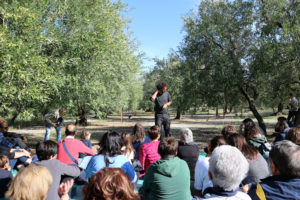
The Bio-Distretto delle Lame (Bio-District), set-up in 2019, aims to promote organic and sustainable agriculture, spreading good rural,
environmental and social practices, protecting local knowledge, biodiversity, developing cultural and gastronomic ecotourism, by the adoption of a participatory model. We aim to contribute to sustainable development and the valorization of the landscape, the empowerment
of our local community, and raise awareness of the local environmental, cultural and social assets. It is a public-private partnership that involves 2 Municipalities and more than 20 organizations (businesses, farmers, cooperatives, associations) willing to develop a local development model founded on the rural roots of our communities.
LOOKING AHEAD:
To improve the efficiency of the partnership, it will be key to improve the organization and productivity of members (maturing). In addition, on the long-term there needs to be a robust strategy to take care of the bio-district landscape and environment through careful management and cooperation with the local administration (combining).
More Information:
Contact Person: Benedetto Fracchiolla
Email: [email protected]
Info about the Innovators and the Innovation portraits Catalogue
FoodSHIFT 2030 aims to launch an ambitious citizen-driven transition of the European food system towards a low carbon circular future, including a shift to less meat and more plant based diets. This transition is necessary in order to address the pressing challenges for food and nutrition security, contribute to the EU commitment of reducing GHG emissions by at least 40% by 2030, and revitalize urban-rural linkages and partnerships.
To do so, it establishes FoodSHIFT Accelerator Labs for maturing, combining, upscaling and multiplying existing food system innovations across nine front-runner city-regions. In turn these innovations contribute to the FoodSHIFT vision.
An Innovation Catalogue called “Innovation Portraits” was created to snapshot each of the Food Innovations connected with each of the FoodSHIFT Accelerator Labs (FALs) across the 9 city regions.
Info about the Innovation Portraits Catalogue
The Innovation Catalogue will snapshot each of the Food Innovations connected with each of the FoodSHIFT Accelerator Labs (FALs) across the 9 city regions. Each FAL has a dedicated innovation focus and each chapter will present innovation cases from a particular FAL. For each of the innovations presented, a snapshot of the innovation concept and purpose will be given, alongside the key impacts the innovation has in relation to the FoodSHIFT Impact Pathways and the acceleration ambitions of the innovation.
In addition, each innovation portrait is also categorized according to its Innovation Dimension. These dimensions indicate what kind of innovation is being presented, and where in the value chain it plays a role. This is indicated by these tabs. The dimensions are defined as follows:
Product – Innovations in this category address new or updated products, including quality, safety and market impact.
Process – These innovations are relevant to new technologies for processing, logistical improvements, infrastructure and new/improved services.
Social – Innovations in this category are relevant to changes in behaviour (e.g. consumers/citizens), development of new relationships and inclusiveness.
Governance – The innovations address policy developments, including food planning, subsidies, taxing, certificates & labelling.
Learn more about all the Innovation portraits: https://foodshift2030.eu/meet-the-people-changing-your-food-system/
The post Bio-Distretto delle Lame appeared first on FoodSHIFT 2030.
]]>The post Tracceverdi appeared first on FoodSHIFT 2030.
]]>Bari, Italy
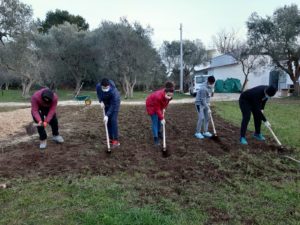
Tracceverdi is a Social Cooperative set up in 2011 built on multidisciplinary skills and oriented to combine the themes of social and territorial sustainability. The goal is to promote sustainable lifestyles, reconnecting man with nature. It manages educational programmes by hosting on-site events, summer camps and training for future farmers, mainly involving schools. They are also producers of organic food. Tracceverdi aims to combine the goal of preventing poverty and vulnerability with social and environmental justice.
LOOKING AHEAD:
Tracceverdi aims to become economically sustainable through the development of a suitable business plan that can help to support its activities on the long term (maturing). For example, Tracceverdi would eventually like to not only offer training, but also work opportunities for vulnerable and disadvantaged people.
More Information:
Website: www.tracceverdi.it
Contact Person: Cecilia Posca
Email: [email protected]
Info about the Innovators and the Innovation portraits Catalogue
FoodSHIFT 2030 aims to launch an ambitious citizen-driven transition of the European food system towards a low carbon circular future, including a shift to less meat and more plant based diets. This transition is necessary in order to address the pressing challenges for food and nutrition security, contribute to the EU commitment of reducing GHG emissions by at least 40% by 2030, and revitalize urban-rural linkages and partnerships.
To do so, it establishes FoodSHIFT Accelerator Labs for maturing, combining, upscaling and multiplying existing food system innovations across nine front-runner city-regions. In turn these innovations contribute to the FoodSHIFT vision.
An Innovation Catalogue called “Innovation Portraits” was created to snapshot each of the Food Innovations connected with each of the FoodSHIFT Accelerator Labs (FALs) across the 9 city regions.
Info about the Innovation Portraits Catalogue
The Innovation Catalogue will snapshot each of the Food Innovations connected with each of the FoodSHIFT Accelerator Labs (FALs) across the 9 city regions. Each FAL has a dedicated innovation focus and each chapter will present innovation cases from a particular FAL. For each of the innovations presented, a snapshot of the innovation concept and purpose will be given, alongside the key impacts the innovation has in relation to the FoodSHIFT Impact Pathways and the acceleration ambitions of the innovation.
In addition, each innovation portrait is also categorized according to its Innovation Dimension. These dimensions indicate what kind of innovation is being presented, and where in the value chain it plays a role. This is indicated by these tabs. The dimensions are defined as follows:
Product – Innovations in this category address new or updated products, including quality, safety and market impact.
Process – These innovations are relevant to new technologies for processing, logistical improvements, infrastructure and new/improved services.
Social – Innovations in this category are relevant to changes in behaviour (e.g. consumers/citizens), development of new relationships and inclusiveness.
Governance – The innovations address policy developments, including food planning, subsidies, taxing, certificates & labelling.
Learn more about all the Innovation portraits: https://foodshift2030.eu/meet-the-people-changing-your-food-system/
The post Tracceverdi appeared first on FoodSHIFT 2030.
]]>The post Agrilocal appeared first on FoodSHIFT 2030.
]]>Avignon, France
THE INNOVATION:
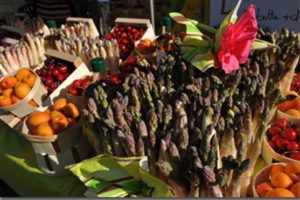
Agrilocal is a network platform that links public procurement stakeholders and food producers/suppliers. The platform takes the form of a national association that facilitates the linking of diverse stakeholders in a legal and formalized way. Buyers can access the geolocation of producers and suppliers, facilitating opportunities for local and regional procurement. The association has four main target areas: economic development, territorial planning, anchoring a sustainable and quality food supply, and the education of new generations. In addition, citizens can also use the platform to access information on healthy eating and eating locally.
LOOKING AHEAD:
Agrilocal is now focusing on the on boarding of more members, particularly suppliers to the platform (maturing). This will ensure that there is enough supply to meet the demand of public procurement actors, and will encourage use of the platform which in turn boosts regional value chains.
More Information:
Website: www.agrilocal84.fr
Contact Person: Pauline Ricard
Email: [email protected]
Info about the Innovators and the Innovation portraits Catalogue
FoodSHIFT 2030 aims to launch an ambitious citizen-driven transition of the European food system towards a low carbon circular future, including a shift to less meat and more plant based diets. This transition is necessary in order to address the pressing challenges for food and nutrition security, contribute to the EU commitment of reducing GHG emissions by at least 40% by 2030, and revitalize urban-rural linkages and partnerships.
To do so, it establishes FoodSHIFT Accelerator Labs for maturing, combining, upscaling and multiplying existing food system innovations across nine front-runner city-regions. In turn these innovations contribute to the FoodSHIFT vision.
An Innovation Catalogue called “Innovation Portraits” was created to snapshot each of the Food Innovations connected with each of the FoodSHIFT Accelerator Labs (FALs) across the 9 city regions.
Info about the Innovation Portraits Catalogue
The Innovation Catalogue will snapshot each of the Food Innovations connected with each of the FoodSHIFT Accelerator Labs (FALs) across the 9 city regions. Each FAL has a dedicated innovation focus and each chapter will present innovation cases from a particular FAL. For each of the innovations presented, a snapshot of the innovation concept and purpose will be given, alongside the key impacts the innovation has in relation to the FoodSHIFT Impact Pathways and the acceleration ambitions of the innovation.
In addition, each innovation portrait is also categorized according to its Innovation Dimension. These dimensions indicate what kind of innovation is being presented, and where in the value chain it plays a role. This is indicated by these tabs. The dimensions are defined as follows:
Product – Innovations in this category address new or updated products, including quality, safety and market impact.
Process – These innovations are relevant to new technologies for processing, logistical improvements, infrastructure and new/improved services.
Social – Innovations in this category are relevant to changes in behaviour (e.g. consumers/citizens), development of new relationships and inclusiveness.
Governance – The innovations address policy developments, including food planning, subsidies, taxing, certificates & labelling.
Learn more about all the Innovation portraits: https://foodshift2030.eu/meet-the-people-changing-your-food-system/
The post Agrilocal appeared first on FoodSHIFT 2030.
]]>The post Des Pieds et des Mains appeared first on FoodSHIFT 2030.
]]>Avignon, France
THE INNOVATION:
Des pieds et des mains is group of organic vegetables producers that pays strong attention to its shared governance using a cooperative legal status (cooperative SME). They supply school catering and organize a collective platform composed of other local producers/farmers proposing various products: fresh vegetables and fruits, dairy products, honey, cold meats. The cooperative is now functioning well and is now acquiring its own farm and land to facilitate fruit and vegetable production. This will boost the platform and facilitate new members joining the cooperative.
LOOKING AHEAD:
The project is ambitious and requires several legal and financial challenges to be addressed (maturing). Improved engagement and cooperation with public institutes is required, for which better communications and understanding of the importance of such a cooperative for maintaining local production and landscape preservation.
More Information:
Contact Person: Matthieu Jayet-Gendrot
Email: [email protected]
Info about the Innovators and the Innovation portraits Catalogue
FoodSHIFT 2030 aims to launch an ambitious citizen-driven transition of the European food system towards a low carbon circular future, including a shift to less meat and more plant based diets. This transition is necessary in order to address the pressing challenges for food and nutrition security, contribute to the EU commitment of reducing GHG emissions by at least 40% by 2030, and revitalize urban-rural linkages and partnerships.
To do so, it establishes FoodSHIFT Accelerator Labs for maturing, combining, upscaling and multiplying existing food system innovations across nine front-runner city-regions. In turn these innovations contribute to the FoodSHIFT vision.
An Innovation Catalogue called “Innovation Portraits” was created to snapshot each of the Food Innovations connected with each of the FoodSHIFT Accelerator Labs (FALs) across the 9 city regions.
Info about the Innovation Portraits Catalogue
The Innovation Catalogue will snapshot each of the Food Innovations connected with each of the FoodSHIFT Accelerator Labs (FALs) across the 9 city regions. Each FAL has a dedicated innovation focus and each chapter will present innovation cases from a particular FAL. For each of the innovations presented, a snapshot of the innovation concept and purpose will be given, alongside the key impacts the innovation has in relation to the FoodSHIFT Impact Pathways and the acceleration ambitions of the innovation.
In addition, each innovation portrait is also categorized according to its Innovation Dimension. These dimensions indicate what kind of innovation is being presented, and where in the value chain it plays a role. This is indicated by these tabs. The dimensions are defined as follows:
Product – Innovations in this category address new or updated products, including quality, safety and market impact.
Process – These innovations are relevant to new technologies for processing, logistical improvements, infrastructure and new/improved services.
Social – Innovations in this category are relevant to changes in behaviour (e.g. consumers/citizens), development of new relationships and inclusiveness.
Governance – The innovations address policy developments, including food planning, subsidies, taxing, certificates & labelling.
Learn more about all the Innovation portraits: https://foodshift2030.eu/meet-the-people-changing-your-food-system/
The post Des Pieds et des Mains appeared first on FoodSHIFT 2030.
]]>