The post Bari’s story: Back to Land Lab appeared first on FoodSHIFT 2030.
]]>Key takeaways
- Bari’s focus on food system transition was on the recovery of abandoned land for use in social and technological food system innovation.
- To achieve this however, they needed to start by creating an enabling environment through a food policy and manifesto for the metropolitan city of Bari.
- Achieving this wasn’t easy. Matching the political interests with the innovator’s interests using the land required a lot of back and forth. Besides, innovators showed low trust in yet another project that demanded their time and might not produce outcomes for them. Therefore, it was important to not only meet the needs of the politicians but also of the innovators.
- Some achievements that could be celebrated along the way are that the food policy has been included in one of the axes of the metropolitan strategic plan towards 2030, making food policy one of the top priorities of the Metropolitan City of Bari. Besides, the impact and awareness of the project was much larger with 41 municipalities than most other projects in Italy, focussing only on the urban impact.
- For a city wanting to embark on a similar journey, the recommendation is to try to seek the needs of locals as much as possible. And try to establish some good human relations that can go above professional life.
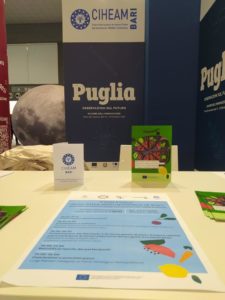
Interview to the Bari Lab coordinators
What was your city’s specific focus in your food system transition and how did you initially start working with this focus area in your city?
Francesca Volpe
Our initial focus was on the recovery of abandoned land, and to capitalise on a parallel project which also focused on abandoned land. But because of some delays, and because of COVID, the two projects, FoodSHIFT and the other project, couldn’t be around in parallel. And this was one reason that obliged us to find another entry point. But the other aspect was that abandoned land couldn’t be recovered without a more systemic approach or decision-making process. Therefore, another focus was to work on the enabling environment.
Lorenzo Labellarte
This is one of the things what we wanted to achieve with the food policy and the manifesto that we created. And the manifesto has been approved and now the food policy is in the process of reviewing to be accepted by the metropolitan city. So, we still don’t have this governance structure, but we proposed one, let’s say. We proposed some way to develop these governance structures.
What were some obstacles or challenges you faced in your food system transition and how did you overcome them (or are planning on overcoming them)?
Lorenzo Labellarte
One of the challenges was that part of our team, the university of Milan, was far away. The geographical distance certainly did not help to build a strong link between us. Especially because we were mainly involved with local activities.
Francesca Volpe
No, it was not so easy. Because first of all, there was also COVID. So, it was difficult to engage people online without establishing direct contact, personal contact. Then it was difficult because there were many drafts of this manifesto which needed to be the closest to the policy expectations. I mean, not to neglect any interests.
Lorenzo Labellarte
So, it has been quite difficult to match the political interests with the innovator’s interests.
Francesca Volpe
Also, because the trust of the innovators was rather low. For them it is like, you know: “Oh, again, another project, but what is in it for us?”
Lorenzo Labellarte
Yeah. Because as Francesca was saying: for some of them it was another project, the level of commitment was “Okay, we give you the things that you want from us …”
Francesca Volpe
I think that when we went to Oostende last May, I think that our human professional success was at its best. Because before innovators were a little bit uncomfortable to provide, to support us with information, be present at workshops. But for instance, the association that recovers food waste, Antonio who came with us to Oostende, was maybe a little bit disappointed that when we visited, we kept in touch with all the innovations in the Oostende ecosystem. He understood how policy commitment was so crucial to achieve all this. So, he understood that we achieved so many things even without a deep commitment from the Metropolitan City of Bari. So, he really appreciated to be part of something that is brilliant in other contexts but could be better also in our city.
If you look back on the last four years, what would you say were your biggest achievements or impacts that you achieved during the project?
Francesca Volpe
One main goal or achievement is that the action plan or the food policy has been included in one of the axes of the metropolitan strategic plan towards 2030. So, food policy is one of the top priorities of the Metropolitan City of Bari. And in October 2023, hopefully, they will approve the action plan. So, they will approve it and they will also try to fund it through regional development funds. But another achievement could be that the metropolitan city of Bari has a group of 41 municipalities. So, it is like a district and the work we did with the metropolitan city of Bari is kind of unique in Italy, because it goes beyond the urban.
Lorenzo Labellarte
Because in Italy, most initiatives of this kind are in the urban area. Here we try to scale up, let’s say, and involve the whole district which comprises 41 municipalities.
Francesca Volpe
Overall, we created stronger links or awareness in the metropolitan city. So, the awareness of an integrated policy which lends on food. And on the other hand, as our institution works mostly at the international level, I mean, at the southern Mediterranean level, with non-EU countries. So, we tried to create an entry point with the Italian Ministry of Foreign Affairs. And now, we are in the middle of discussing key priorities, key priority actions that could be implemented in a local and urban context in southern Mediterranean countries.
Lorenzo Labellarte
Maybe we should also name the connection with Taranto. As a Living Lab, we are now trying to replicate the experiment that we did in Bari, in creating the local food policy, in Taranto. So, we applied the Living Lab approach with three workshops, and the public authorities were involved from the beginning of the process. Now, we are more or less at the same level as in Bari. I mean, now we are developing the document containing the action plan for a potential local food policy in Taranto, and we are waiting for some feedback from their side. Because the idea is to adopt the same process of endorsement of the policy in Taranto.
Francesca Volpe
Overall, we also promote the action plan that follows the manifesto. We tried to scale up the relevance of the process of the metropolitan city of Bari in other networks. So, we linked up with Slow Food at the national level, we linked up with the Italian network for local food policies. We tried to improve the capacity of the institutional body to exchange with other cities or experiences.
Lorenzo Labellarte
We managed to start, to really start the process. To have the topic on the political agenda itself. So, the topic is now there, it is known. Now, there will be a lot of work to do.
What advice do you have for other cities who want to embark on a similar journey?
Lorenzo Labellarte
From my side, I will say, try to seek the needs of locals as much as possible. And try to establish some good human relations that sometimes can go above professional life, let’s say. Because from that kind of relationship, you can have greater impacts also on the ecosystem, since you will engage the same actors also for future funding proposals, for future activities. So, I think these are the two pieces of advice I would give.
Francesca Volpe
I would say, policies matter for each of us. Whatever you buy, there is much more behind it.
Lorenzo Labellarte
As Francesca is saying, everything is connected. Everything is connected.
Contact details
Ciheam Bari
Francesca Volpe – [email protected]
Lorenzo Labellarte – [email protected]
Damiano Petruzzella – [email protected]
Check out previous blogpost of the Bari Lab:
Feeding the future of local food policies across the Mediterranean
The post Bari’s story: Back to Land Lab appeared first on FoodSHIFT 2030.
]]>The post Feeding the future of local food policies across the Mediterranean appeared first on FoodSHIFT 2030.
]]>Each context has its own needs and tailored solutions and initiatives to meet them but one common aspect occurring in almost all places is the lack of specific competencies both at institutional (in terms of policies that cities can adopt) and organizational level, because of the lack of specific capacities and understaffed departments, above all in small and medium sized cities.
Moreover, working on urban food policies requires innovative governance decision-making mechanism: the local one, through the active involvement of civil society, business, and research to devise food strategies for more equitable social and economic development, and the institutional one, through the linkage of higher institutional and decision-making levels, fostering the scale up of the local process to regional, national and international levels.
In this respect, the Bari FAL experience, led by CIHEAM Bari with the support of the Metropolitan City of Bari, extremely innovative in the national panorama, address a higher policy level compared with the urban one: the governance process has covered the metropolitan scale and also represents an opportunity to qualify the Bari area as a good practice for other cities. In this regard, in order to test the process on other territories, urban design workshops have been launched to define strategic plans for urban food policy in Taranto, Tricase and Tirana.
The most notable achievement has been reached with the city of Taranto, which, as a result of the work done, will soon be in charge of signing the Milan Urban Food Policy Pact.
The co-design activities of the strategic plan for the transition of the food system of the City of Taranto were divided into three phases, preceded by a kick-off meeting (April 2022) to present the overall program, expected objectives, activities, and actors to be involved. The priority and preparatory elements were the involvement of civil society, citizens, public administrations, universities and research organizations, and businesses. Thanks to the kick-off meeting and an intensive activity of involvement of local actors implemented with the valuable support of the University of Bari – Ionian Department, in accordance with the quadruple helix approach, it was possible to launch the co-design workshop.
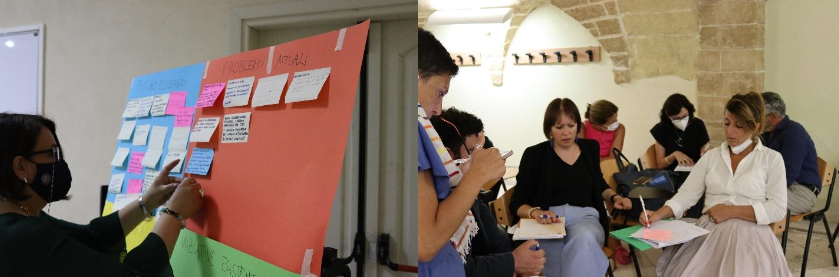
Photo credits: CIHEAM Bari
The first co-design phase took place with the first meeting on May 25, 2022, which was a central moment of discussion (brainstorming) with local stakeholders for identification of the desired future (vision); identification of problems that prevent the achievement of the desired future; existing projects and activities that contribute to the mitigation of problems, and missing actors that need to be involved.
The second phase, on July 5, 2022, involved the use of brainwriting to co-design solutions with respect to the problems identified in the previous phase. The participants, after being divided into three groups, developed an idea for each of the problems identified in each vision.
After analyzing the results of the previous meetings and comparing them with some international best practices, the third and final step, held on November 3, 2022, was to define, prioritize and validate the key actions to be included in the food policy.
The participatory process enabled identification of strategic orientations and priority actions underlying the food transition of the city of Taranto. That is, those actions that can represent a first element of sharing with the policy makers of the city of Taranto represented by the City Council as well as a political commitment, with due insights, for the elaboration of Taranto’s food policy.
Eight actions have been identified:
- School outreach and consumer awareness on diet and waste reduction/valuation.
- Waste recovery and valorization.
- DE.CO. municipal designation to enhance local food.
- Neighborhood hub Waste and indigent redistribution.; networks, cooperation, platforms, and financial support.
- Regeneration of urban spaces, urban agriculture and urban gardens.
- Use of public land, mapping land allocation for dedication to youth entrepreneurship.
- Training and support for business innovation processes (open innovation hub) for food transition.
- Markets and access to food.
The results obtained in Bari and Taranto provided input for the potential scale out of the process at both the national and Mediterranean levels.
The “innovative focus” of the BARI FAL, allowed CIHEAM Bari to strengthen connections and collaborations with other networks and to share its Mediterranean strategic positioning, through international cooperation projects, with other cities in Southern Mediterranean, and the connections with the Italian Ministry of foreign affairs and international organizations.
At the national level, CIHEAM Bari is a member of the Italian Local Food Policy Network, (https://www.politichelocalicibo.it/) a group of nearly 600 academics, researchers, administrators and activists involved, for research or professional purposes, in planning sustainable territorial food systems.
At the Mediterranean level, on the other hand , CIHEAM Bari actively participated in a series of meetings, (the Naples conference on “Food Policies in Mediterranean Cities” in May 2023, the “Second United Nations Summit on Sustainable Food Systems” in Rome in July 2023, and the Rimini Meeting on “Food security and sustainability: cooperating to grow” in August 2023), which shed light on a wide variety of experiences and ideas, highlighting the fundamental role of cities in addressing complex food security issues.
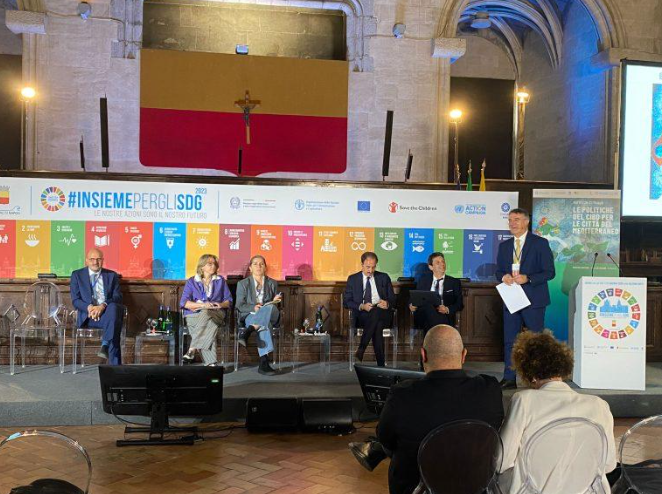
Photo credits: CIHEAM Bari; Naples, May 2023.
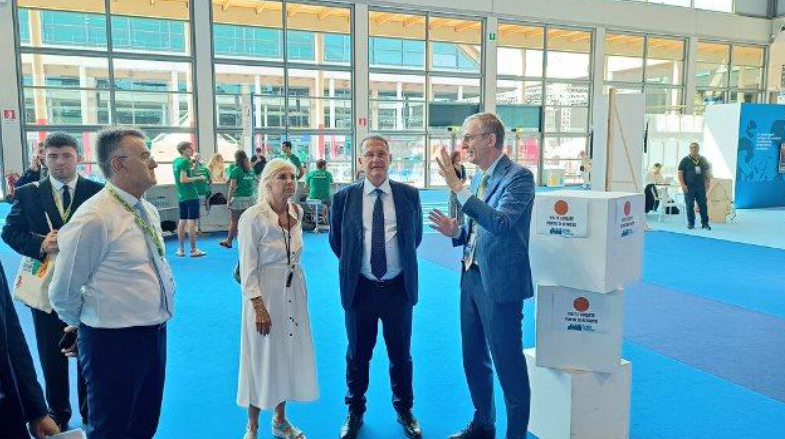
Photo credits: aise. Rimini, August 2023.
Building on this, CIHEAM Bari has expanded the dialogue on the topic of food transition in the Mediterranean, involving governance actors at a higher level (regional, national, and international) to promote the importance of a multi-level governance approach to the topic of food policies, and how important this is to ensure their effectiveness. Indeed, the experiences show the need for integration between different policies and sectors, since a food policy includes within it issues and sectors across the board (e.g., education, infrastructure, technological and social innovation, etc.).
What has been achieved so far has provided input to work on the food transition issue even beyond the end of the FoodSHIFT2030 project, capitalizing on its results. To this end, for example, CIHEAM Bari will host in January the general assembly of the aforementioned Italian Local Food Policy Network, with the aim of discussing and confronting the issue of food policies in Italy and in the Mediterranean.
Moreover, CIHEAM Bari has been working on new projects by participating in new European calls for proposals, (mainly Interreg) with the aim of supporting the food transition and the circular economy in the agrifood system by developing strategies, action plans and solutions using the Living Lab approach, also favouring new territorial cooperation networks that are needed to channel the joint effort toward more sustainable and resilient food systems.
Active participation of stakeholders of the quadruple helix, following the Living lab approach, has proven to be efficient in designing action plans. In fact, the involvement of local stakeholders ensured not only that citizenship is represented in decision-making processes, but also that what emerges from the co-creation process is based on the real needs of the communities and their reference environment.
At the same time, the strengthening of collaboration and dialogue between experiences and cities, both nationally and internationally, is certainly a pivotal point, as it promotes exchanges of knowledge and experiences that can facilitate, including through networking, the implementation of local food policies and monitor their developments, as well as the sharing of processes, approaches and solutions put in place.
Finally, given the cross-cutting nature of local food policies, fostering the adoption of integrated policies could ensure their greater effectiveness, and positively affect the well-being of communities from social, economic, and environmental perspectives.
The post Feeding the future of local food policies across the Mediterranean appeared first on FoodSHIFT 2030.
]]>The post A common vision for the future of food sustainability in Bari appeared first on FoodSHIFT 2030.
]]>It took the opportunity created by the FoodSHIFT2030 project to build the Bari Food Accelerator Lab (FAL) – Back to land, aimed at enabling and attracting new young entrepreneurs to envision new uses for abandoned lands in the metropolitan area of Bari.
In that period synergies with other initiatives could favour the attainment of this ambitious goal.
However, the COVID-19 pandemic and the following downturn deviated the initial focus, so that the local team leading the Bari FAL started a new process with the city-region stakeholders resulting in an institutional innovation, built on participatory governance, that led to an advocacy plan, the Manifesto for the Food System Transition in the Metropolitan City of Bari and the following action plan of the Metropolitan Food Policy.
How did it all begin?
The citizen-driven innovators involved by the BARI FAL were actively committed to favouring food system sustainability. They worked in short food supply chain, ethical and responsible use of abandoned lands, food waste reduction and leftover recovery, urban farming and urban gardening, organic food, professional training of vulnerable people to be employed in the catering or farming sector, public-private partnership for agroecosystem promotion.
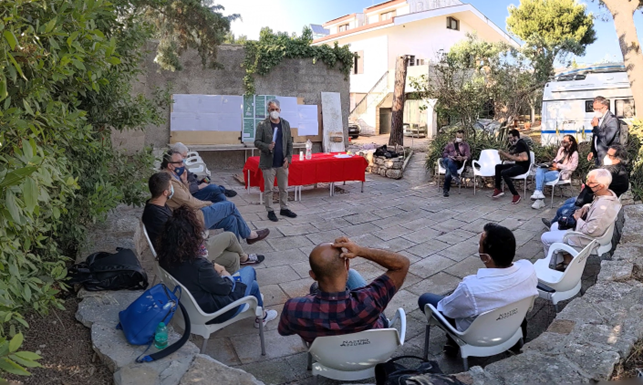
From 2020 to 2022, CIHEAM Bari, as FAL leader, involved the innovators in a participatory co-design process to identify their needs, barriers to overcome, and solutions, based on a shared understanding of common values and commitment towards the local food system transition.
The participatory process resulted in the drafting of the Manifesto for the food system transition in the Metropolitan City of Bari.
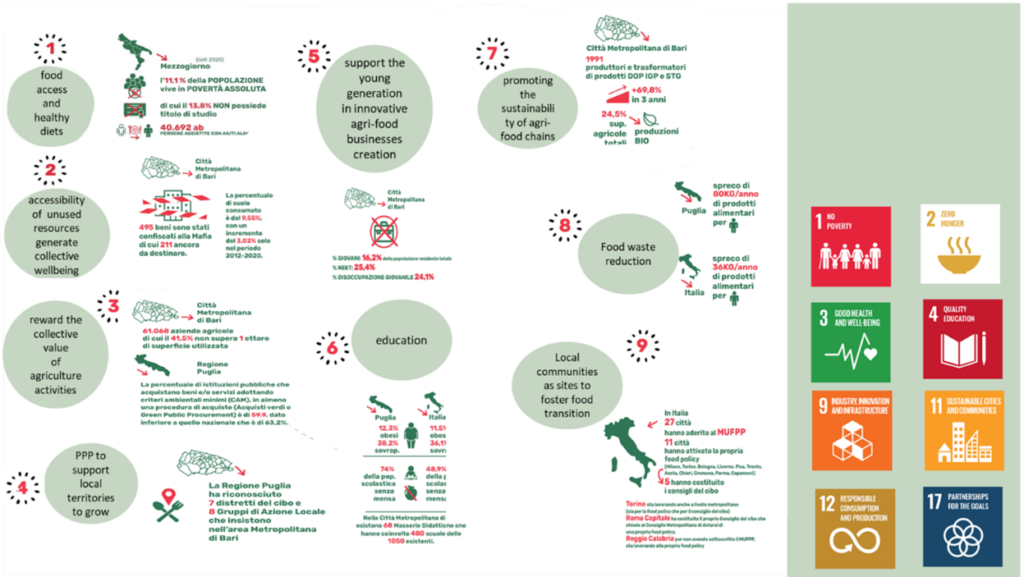
The Manifesto identifies trajectories for the enhancement of the social, productive, and environmental capital of our territory and to create the conditions for fair access to food, healthy nutrition, the availability and usability of spaces. A scenario analysis highlighted the weaknesses that those ambitions were intended to overcome. The trajectories were also designed to contribute to the achievement of several Sustainable Development Goals.
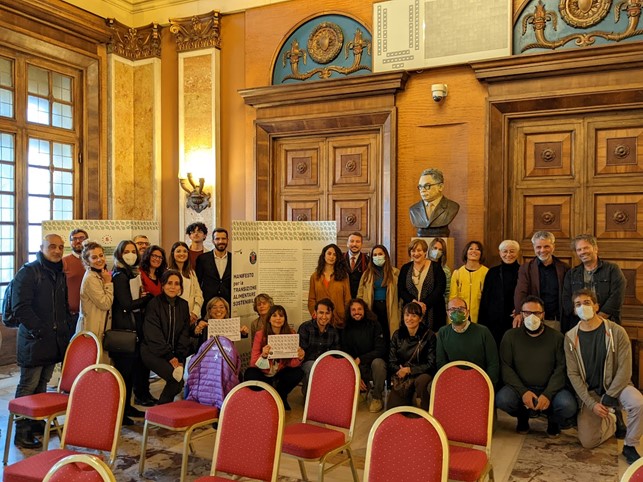
The Metropolitan City of Bari approved the Manifesto on April 22, 2022 and presented it in a public meeting that launched the subsequent process aimed at extending the participatory process to the working groups involved in the 2030 Metropolitan Strategic Plan.
On May 2, 2022, the first working group was invited to a public meeting at the Metropolitan City of Bari. It represented the voice of youth and their visions for the area where they lived.
Last year, the Bari FAL further extended its action aimed at collecting needs, proposals, and recommendations, by broadening the participation of organisations, businesses, and local authorities to better focus and shape the local food policy.
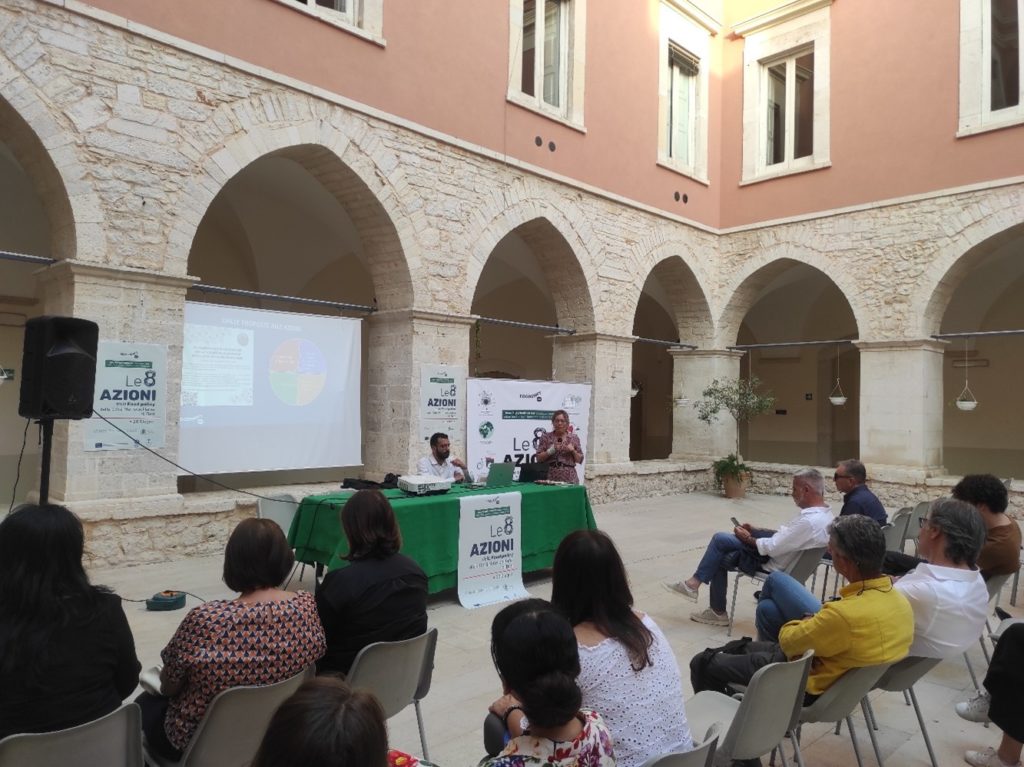
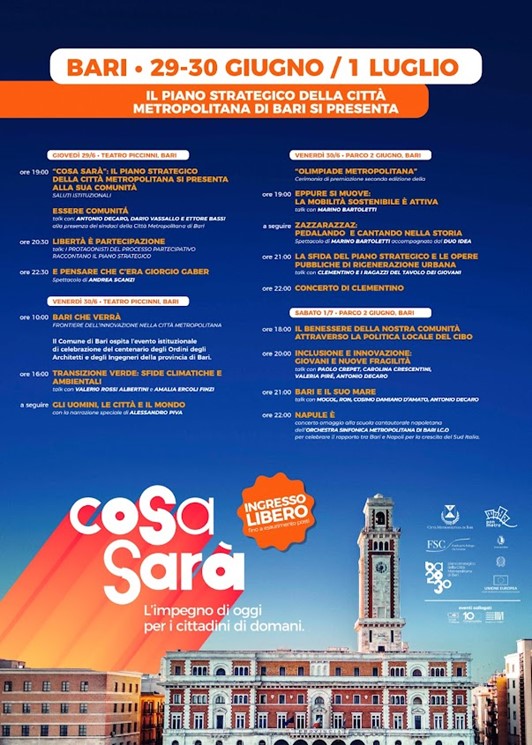
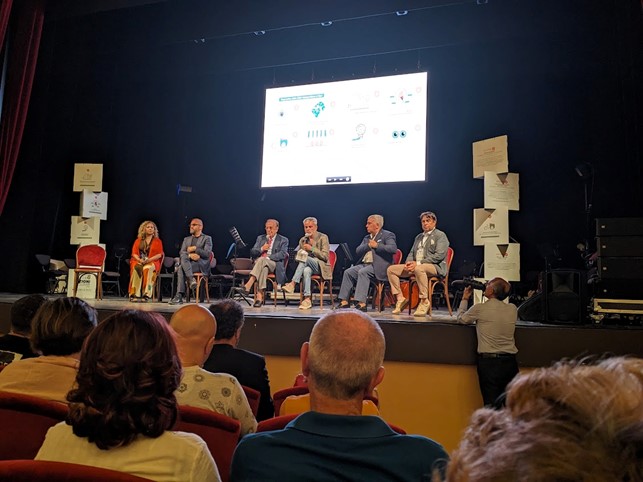
The strong commitment of the Metropolitan City of Bari to the local food policy resulted in the 2030 M??????????? S???????? ?l?? that was officially presented last July 2023 in a three-day event including institutional meetings, talks, insights and performances to showcase to citizens the overall Metropolitan strategy.
The ‘???? ????? Bari 2030’ event initiative is intended to raise awareness on the relationship between food and community wellbeing, by recognising the contribution of every single actor: the producers who ensure rural-urban cohesion by providing local, quality and fresh products; individuals who are responsible for adopting healthy eating habits which benefit the community as a whole; the schools that can support students and parents to ensure proper nutrition, waste prevention and the creation of school gardens.
Inspiring territories, nurturing citizens’ capacities and engagement
In May 2022, outreach activities were launched in 2 small and medium cities in Apulia: Tricase and Taranto, and in Tirana in Albania. Based on the interest expressed by local government administrations, CIHEAM Bari initiated with these cities a participatory process aimed at co-creating tailor-made transition pathways to make local food systems more sustainable and resilient. Different actors, representing the quadruple helix actors, i.e., associations, companies, research institutions and local administrators, participated in public meetings, mobilizing interest and commitment to design their future food policy.
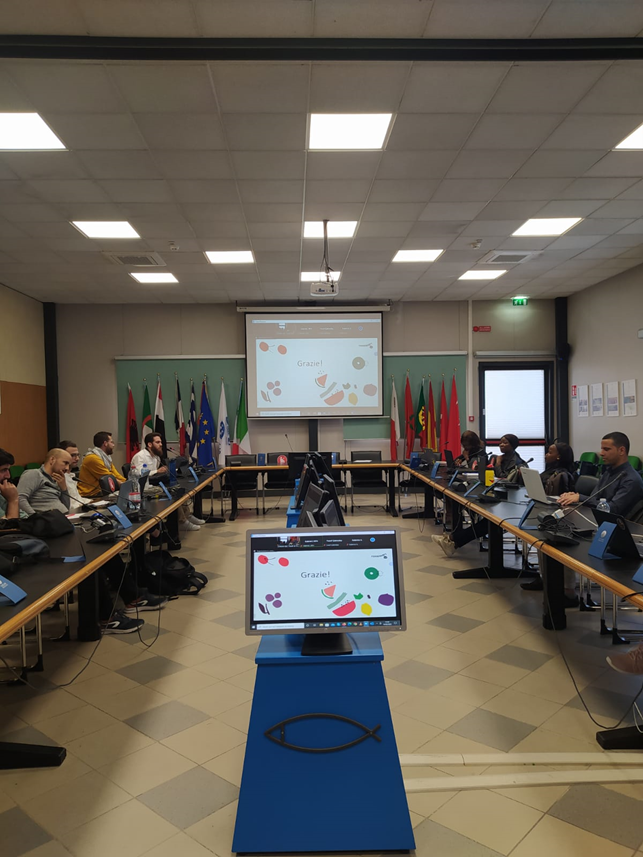
CIHEAM Bari’s activities and initiatives were targeted primarily towards youth to involve them and understand the needs of future generations as actors in the food transition. During the initiative “Reshaping Mediterranean cities: young changemakers for the food transition” 14 young people from 11 Mediterranean and African countries presented the solutions they have identified to meet the challenges related to water, recovery of food waste, alternative energies, valorisation of local products, environment, access to food and access to land, in their cities.
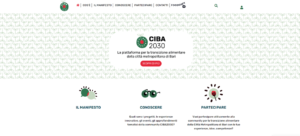
To highlight the path, initiatives and activities carried out by Back to Land Fal, CIHEAM Bari, in collaboration with the Metropolitan City of Bari, has implemented a digital platform called “CIBA2030” (Metropolitan City of Bari towards 2030).
This platform is intended to support the participatory process of citizens and institutions to promote the local food transition and build together the Food Policy of the Metropolitan City of Bari. By registering on the platform, users could learn about and discover local actors actively involved in the fight against food waste and in sustainable production and consumption; they could be updated on local initiatives, share their initiatives, and interact with the community.
On the platform it is also possible to consult the Manifesto and collaborate on the initiatives working on the same issues.
Ciba 2030 is part of the over 100 cities that signed the Milan Urban Food Policy Pact (MUFPP) in 2015, a tool for cooperation between cities and for the exchange of good practices on urban food sustainability.
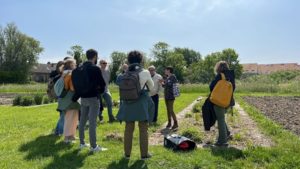
Within the activities related to other FaLs involved in Foodshift2030 project, CIHEAM Bari participated in the ??????? ??? ??????? ???????? ‘??????? ?? ?????’ event organized by the Food Accelerator Lab in Ostend (Belgium), to learn about the achievements reached by the City of Ostend and share some concrete examples to fuel new initiatives worth of being replicated by the Bari FAL and its innovators. The main objective is to enhance a peri-urban area by providing social, cultural, inclusive, and sustainable services to urban dwellers. Allotments near a care home for elderly people and the Community Supported agriculture in the Gardens of Stene were inspiring experiences triggered by a smart integration between spatial planning and urban food policies. The most relevant takeaway is that cities have a lot to do, experiment, try and fine tune solutions for the benefit of their communities.
The post A common vision for the future of food sustainability in Bari appeared first on FoodSHIFT 2030.
]]>The post Multiplying the impact – sharing experiences: Peer-to-peer learning in FoodSHIFT2030 appeared first on FoodSHIFT 2030.
]]>Keywords: peer-to-peer learning, knowledge transfer, network
The peer-to-peer learning approach is learning at equal level, where people with similar tasks, aims or challenges share experiences, ideas and knowledge with each other without hierarchies.
Peer-to-peer learning in FoodSHIFT2030
There are many peer-to-peer learning formats, some of which have been gathered within FoodSHIFT2030 in deliverable 5.3 under the title “Multiplying the impact – sharing experiences: training and guidance materials for knowledge transfer”. This collection primarily addresses the FoodSHIFT2030 Accelerator Labs (FALs) and aims to facilitate peer-to-peer knowledge transfer of experience with food system innovations among all FALs as well as among the FALs and the FoodSHIFT2030 Enabler Labs (FELs). However, it can also serve as a diverse source of inspiration for actors in the field of mutual knowledge transfer beyond the project’s lifetime and thematic scope.
The document is available for download in the “resources” section of FoodSHIFT’s website among various further inspiring outputs of the project: https://foodshift2030.eu/resources/.
On the one hand, the material contains peer-to-peer learning formats in general description which can be applied in a variety of situations and knowledge transfer environments. On the other hand, there are knowledge transfer formats that were developed or/and applied specifically within the FoodSHIFT2030 context.
It is an elementary aspect that not only the knowledge transfer formats themselves follow the peer-to-peer approach, but also the compilation of the material took place in co-creation, a collaborative process of knowledge generation: hereby, the FALs generated knowledge for each other, such as good practice cases from within the project as well as specific training material from a FAL’s individual experience. Further, in an iterative bottom-up approach which required the intensive involvement of the FALs, their needs, strengths and challenges were identified, for instance during consortium meetings, in interviews and in brainstorming sessions.
Thus, in the spirit of peer-to-peer learning, most of the training and guidance material was not unilaterally created by FoodSHIFT’s WP5 team for knowledge transfer but arose from the condensed outcomes of these assessments. The WP5 team, the knowledge brokers, hereby guide this knowledge generation to ensure that the knowledge is being transferred within and beyond in formats suitable for the respective target groups.
An exemplary format: a series of video interviews
In addition to the tools for networking, information, and knowledge transfer, as well as best practices and implementation examples from FALs and much more, the collection includes a series of video interviews in which FALs have their say:
Recorded at the consortium meeting in Brasov, they spontaneously talk about their innovation principles as well as their experiences in the project with a focus on the interaction with the FELs with whom knowledge transfer and experience sharing is taking place very specifically within the project.

© Annika Frühbeißer
In addition, an introductory animated video has been created that explains a little about the FALs and their activities in FoodSHIFT2030. You can find the four video interviews and the introductory video on the YouTube channel of FoodSHIFT2030 in the playlist: Exchange visits: Knowledge Exchange FAL to FEL.

© Annika Frühbeißer
Shooting and editing video requires some training, and a course is recommended. However, if once the necessary know-how has been acquired, all you need is a smartphone with a stabilisator (a so-called gimbal), a filming and editing app as well as a clip-on microphone to professionally produce your own videos.
Videos are establishing as a knowledge transfer format since they correspond to the zeitgeist and offer many advantages:
- Knowledge can be conveyed in a highly compressed and easily understandable way through video content.
- In addition to real-filmic elements, animation elements allow creative freedom and add a framework and structure to a video; for instance, we used the simpleshow.com programme in FoodSHIFT’s videos.
- Knowledge can be accessed freely at any time, the knowledge flow can be paused and repeated if the videos are published on public platforms such as YouTube or a project website.
- Onward dissemination by the viewers, even on a large scale, is low-threshold and can have a great impact (social media).
- And last but not least, it is great fun to talk to your peers and gain new insights whilst you are shooting the videos!
Watch the series of video interviews here below:
The post Multiplying the impact – sharing experiences: Peer-to-peer learning in FoodSHIFT2030 appeared first on FoodSHIFT 2030.
]]>The post Innovators: Meet the people changing your food system appeared first on FoodSHIFT 2030.
]]>In these portraits, each of the 90 innovators has been profiled using compact descriptive section addressing the key activities and achievements so far as well as the near future perspectives under the heading ‘Looking ahead’. The one-page portraits are complemented by infographics on the impacts and the relevant contact details.
For quick orientation, the innovations have been categorized according to four innovation dimensions: product, process, social & governance. These dimensions enable us to identify what kind of innovations are being initiated across city regions and provide suitable, relevant support.
These rich examples give us a glimpse of how food system innovations can look, and how they can be effective in addressing elements of the food system, and the relevant stakeholders that are involved. Together, these innovators and related stakeholders form the Innovation Ecosystem in their city-region, which has the potential to redefine local food systems.
Supporting Innovations
In addition to these differing innovation dimensions, the Innovation Portraits also highlight the varying maturity levels seen among innovations. This maturity refers to the developmental stage of an innovation, which can be useful in identifying the needs and next steps that an innovator can take to bring an idea to life, from Eureka! moment to viable product or service.
Based on the maturity of an innovation, we can establish what kind of support would be best suited to the innovator. This support takes three main forms:
Maturing – advancing an innovation for better application as a solution. E.g. improved functioning of the innovation, better organizational structure, developing a business strategy…
Combining – linking of different innovations for strategic purposes. E.g. partnerships to facilitate new services, resource sharing, collaboration towards a common goal (coalitions, associations…)
Upscaling – increasing the impact and/or outreach of an innovation. E.g. increasing production, adding new products or services, outreach to new markets or communities, open-source knowledge sharing…
The Innovation Portraits provide us with an important reflection of the food system transition, in that many innovations are still early on in their maturing process, and in addition to the passion and ambition of the innovator themselves, will require targeted support and enabling conditions to thrive.
Providing us with snapshots of diverse innovators per city region, the Innovation Portraits also offer us an opportunity to consider how the Innovation Ecosystems in these city regions look. For example:
- Which innovators have (potentially) complementary resources, products or services?
- Which partnerships can be formed?
- Which innovators have a common interest or goal?
In particular, these questions can open the door to opportunities for combining, stimulating activity in the local Innovation Ecosystem. Looking at long-term perspectives, upscaling is a key acceleration mechanism for innovations that are at a high level of maturity and wish to increase their reach and impact.
Discover all INNOVATORS at a glance here!
Opportunities for Change
The 90 cases highlighted by the Innovation Portraits provides not only an inspiring portfolio of the diverse innovations that are actively contributing to food system transition, but also an example of how individual action, by individual innovators, can kick-start the development of an innovation ecosystem. These innovation ecosystems are fundamental in challenging the status-quo of food systems, and can generate awareness, interest and engagement with change. Through supporting the innovators highlighted in these Innovation Portraits, the FoodSHIFT2030 consortium hopes to accelerate the transition to a low-carbon, circular and plant-based food system in Europe.
Download the Innovation Portrait brochure here.
The post Innovators: Meet the people changing your food system appeared first on FoodSHIFT 2030.
]]>The post ‘Listening is key’ – FoodSHIFT explores governance and food strategy appeared first on FoodSHIFT 2030.
]]>WATCH THE RECORDING SESSION:
Governance and Food Strategy was the theme of the first workshop in this new series of trainings organised by Sustain and Food Matters for FoodSHIFT2030. The workshops aim to share FoodSHIFT guidance and expertise with organisations new to the network, building on and strengthening an international network of like-minded people working together towards sustainable food system transformation.
Facilitated by Ben Messer from Food Matters and chaired by Sofia Parente from Sustain, the workshop shared practical approaches, resources and inspiration for developing partnership governance and strategy. The workshop took an inclusive, participatory approach inviting the 40 plus attendees to meet each other and share their current challenges together, both in breakout rooms and in the main room. Most participants were a partnership or food policy council looking to transform the food system or develop a food strategy for their place and most were new to the FoodSHIFT network.
What a sustainable food future looks like?
According to Ben Messer, actively sharing perspectives about where you are at currently and listening to new people is at the heart of any successful partnership.
“The effectiveness of food partnerships and food strategies depends on engagement of people and communities. A sustainable food system is achieved through representation of different perspectives, partnership working, a sense of ownership of the process and agency in bringing about positive change.”
Listening to key stakeholders is key – from citizens to local businesses and the local authority – and to start building the strategy from there. Developing the strategy can then identify where the buzz is, where activity is going well, and to develop an action plan from there.
In response to a Mentimetre question: ‘what 3 THINGS would show you that progress is being made?’, answers from participants ranged from citing advances such as diverse food infrastructure; communities working together; farmers valued; equity access across the city to healthy food and better local supply chains. You can view the full list of responses here.
Resources for developing a food strategy
The workshop then moved on to sharing resources developed by FoodSHIFT and the UK’s Sustainable Food Places programme, resources that could be useful for participants in developing their own food strategy for their places.
Beatrice Walthall, from Berlin FoodSHIFT Lab and the Leibniz Centre for Agricultural Landscape Research (ZALF), presented the FoodSHIFT Toolkit How to Cook Up Civic-Driven Food System Governance? A step-by-step Guide for Practitioners.
Developed within FoodSHIFT with substantial support from IFOAM, Sustain and Food Matters, with input from FoodSHIFT cities Ostend, Barcelona, Berlin, the toolkit is based on practical and theoretical experiences and knowledge. There is specific focus on civic-driven food system governance, offering a step-by-step guide for practitioners with recommendations, exercises and further material to develop food governance strategies in a civic-driven, participatory and deliberative process. The guide consists of four sections with five corresponding (potential) steps for developing a food strategy:
- Initiation
- Assessment
- Stakeholder Engagement
- Building and Action Planning
- Evaluation
Ben Messer presented the Sustainable Food Places Toolkit. Developed by Food Matters and based on experience with a range of over 80 different food partnerships and from the direct experience of SFP Network members. The toolkit offers resources under 3 headings: Building a food partnership; Developing a food strategy and Reviewing and refreshing your partnership and strategy. Tools particularly relevant to this workshop are those with a specific focus on:
- Developing a Food Vision and Charter
- Food system mapping
- Community food mapping
- Food focus groups
- Food summits
- Action planning
Developing a food strategy: case studies
The workshop then finished with a conversation with two inspiring case studies, who are already working with multiple stakeholders in developing a food strategy in their area.
Lorenzo Labellarte, from the Mediterranean Agronomic Institute of Bari (CIHEAM Bari) and FoodSHIFT Lab Bari shared insights from his organisation’s work in Bari, in the Puglia region of Southern Italy. There municipalities have developed a shared vision for a sustainable food future, worked this into a manifesto and are now at the stages of implementation. The model in Bari is now being used to help nearby city Taranto in developing a similar action plan for their local food strategy.
Alex Britten-Zondani from East Sussex, a county in southern UK, shared how local district food partnerships are coming together to develop and deliver a county wide food action plan, working alongside county and local councils, and other key stakeholders. This work intended to ensure there is action happening at a wider regional level to support food systems change, alongside what is already happening at grassroots level, and Alex shared how this is being approached.
The topic of citizen engagement came up repeatedly in the workshop and in these last conversations, with both Lorenzo and Alex stressing the need for consistency here, ensuring citizens are invited at all stages of consultation and development. Participants also shared their concern for food producers. With most farmers in the UK, France and other countries over 50 years old and with no plans for succession, there are worries about the future of local sustainable food production if strategic support is not provided. The power of large national and international retailers to set prices and push margins down for farmers also came into the discussion.
Applying the learning and resources to other areas
The workshop ended with some takeaway questions for participants to think over to help consolidate what was learned at the workshop and in preparation for the following three workshops to take place in 2023.
- How could you use the approach we’ve demonstrated and apply it to your place?
- Which resources could you use to help you do this?
- How can the experience of Bari and East Sussex inspire you in your work?
All were invited to join the FoodSHIFT+ email forum as a way to continue the conversation beyond the workshop and feed into the international network with their own challenges, insights and expertise.
Keep an eye out for the next three workshops in 2023 as part of this series. These workshops are open to local food partnerships or councils who would like to join the FoodSHIFT network, keen to build local food strategies with community involvement that result in positive transformation of the food system.
The post ‘Listening is key’ – FoodSHIFT explores governance and food strategy appeared first on FoodSHIFT 2030.
]]>The post Press Release – What you do everyday matters appeared first on FoodSHIFT 2030.
]]>FoodSHIFT 2030 project has brought together 30 different organisations and over 120 project personnel with all kinds of backgrounds, expertise and experiences. This article forms a collage of the every-day works of individuals that were collected during lively and successful discussion at the recent Consortium Roundtable in Brasov, Romania (take a look to Brasov Press Release here!).

FoodSHIFT team in Brasov – photo credits to Brasov FAL
The TLDR inspiration – It is easy to feel overwhelmed, lost and disheartened when your every-day work is to ‘transform the food system’, But take a moment to acknowledge one’s own work, no matter how small, together with the collective works of many individuals moving in the same direction, Now the pathway to highly ambitious goals like transforming the food system become a little more illuminated, a lot less daunting and a whole lot more achievable!
In no particular order, here is a snapshot of the every-day works from 20 individual ‘FoodSHIFT’ers’ that form a collective effort towards a transformation of the EU Food System:
Education and Capacity Building
- ‘Counseling kitchens, pushing the agenda, developing tools’
- ‘Educational, social & environmental issues’
- ‘it’s all to support the central kitchen team!’
- ‘Teaching about carbon footprint (including food aspect), environmental impact assessment, using GIS for different spatial analysis.’
Citizen Engagement
- Participatory and action research methods. This includes design and methodological undertaking tailored to facilitate learning on social innovations for food system change. Outputs of research will seek broad communication with the multiple stakeholders of city-regions food systems.
City planning
- ‘Understanding cities’ needs for food system knowledge and tools and helping meet these needs; engaging diverse stakeholders in food systems science’
Communication
- ‘Organising public webinars and training workshops to disseminate knowledge and best practice, supporting the leaders of other work packages to produce assets which will be part of the legacy of FoodSHIFT’
Governance Planning
- ‘policy advice, implement concrete actions for the food strategy, involving stakeholders and citizens in the food system, organising campaign dealing with food (eg veggie challenge), contact with colleagues within the city departments on food, contact with key stakeholders in the steering group/possible future food council’
Management:
- ‘Strategic coordination of large, multi-disciplinary partnerships towards food system transition, continuously fostering relations for the identification and execution of common rewards, day to day implementation of flexible, innovative project management’
- ‘Following project meetings, Answering to related emails, looking into forthcoming actions, involvement & our obligations according to planning, working on deliverables’
Knowledge Sharing
- ‘Exchanging with FALs as the organizational hubs for food system transition in their efforts to reach out and place their activities in the wider picture of international policies and methods/tool applications.’
- ‘Stakeholder engagement, strategy development, knowledge co-creation and sharing, research and publishing, lots of e-mails’
- ‘I’m the link between the action and the Consortium’
Research
- ‘Mapping the ecological footprint of food consumption patterns in city regions’
- Data analysis of Brasov food system. Communication with FELs. Dissemination of FoodSHIFT2030 activities. Active participation in workshops.’
- ‘Development of guidelines and feedback loops for acceleration of innovation.
- Undertaking research on food system innovations’
- ‘Supporting the development and piloting of open source technology for the production, elaboration, consumption, and re- & upcycling of food in cities.’
On the ground actions
- ‘Barcelona FAL Food Tech 3.0 Lab Lead : Design, implement and monitoring each of the actions necessary to develop the FOOD SHIFT 2030 project, as well as support each of the project’s innovators. Follow in detail the assignment of the Budget of the FOOD SHIFT 2030 project. Contribute to the development of the food system through activities with the FELs established for Barcelona (Hamburg, Avignon and Milan)’
- ‘we organised CSA at our University, so I am engaged in this process and taking veggies & fruits boxes each week. I don’t eat meat (only fish) as well as not dairy (cow’s) products. Within Students Scientific Organization – we are obtaining extra funds to establish community gardens in participatory way.’
- ‘Living Lab approach, participatory workshops and research designs, strategy co-creation, public communication (podcasts, interviews, short movies, print media), qualitative and quantitative modelling approaches and other methods of social and environmental research’
The post Press Release – What you do everyday matters appeared first on FoodSHIFT 2030.
]]>The post PRESS RELEASE: Over 30 city-regions selected to join FoodSHIFT project as Fellows appeared first on FoodSHIFT 2030.
]]>FoodSHIFT2030 has selected over 30 place-based food partnerships to join the European wide project as FoodSHIFT fellow city-regions, with the aim of establishing FoodSHIFT Enabler Labs (FELs) in their respective local areas.
The fellow city-regions have been paired with one of the 9 already established FoodSHIFT Accelerator Labs (FALs); city-based partnerships of engaged citizens, NGOs, SMEs, researchers, local administration and policy makers, located in Barcelona, Bari, Wroclow, Ostende, Copenhagen, Brasov, Berlin, Avignon and Athens.
The new Fellows will be invited to participate in a multilateral exchange of knowledge, expertise and experience with both their paired FALs and across the project as a whole.
The list of successful applicants and their paired FALs are as follows:
- Athens FAL with Vrilissia, Nea Smyrni, Korydallos, Halandri, Agia Paraskevi in Attika Region (GR)
- Avignon FAL with Albi-Occitanie (FR), Bergamo (IT) and Bordeaux Métropole (FR), Geneva (CH) + Manger Demain (BE)
- Barcelona FAL with Exeter (UK), Hamburg (DE), Milan (IT), Paris (FR)
- Bari FAL with Tirana (Albania), Taranto and Tricase (IT)
- Berlin FAL with Bochum, Freiburg & Region, and Luebeck (DE), and Zurich (CH)
- Brasov FAL with Alba Iulia, Sibiu, and Cluj-Napoca (Romania)
- Copenhagen FAL with Basel (CH), Kaunas (LI), Plymouth-Devon (UK)
- Ostend FAL with Bruges, Eeklo-East-Flanders, and Kortrijk (BE) and Lisbon Metropolitan Area (PT)
- Wroclaw FAL with Warsaw (PL), Greater Manchester (UK) and Trento (IT)
The inclusion of Fellows to the project builds on the FoodSHIFT aim to shift urban food systems towards more sustainable food systems, putting citizens at the centre of change in a novel approach to scale-up, multiply and share the best food innovations European communities have to offer.
Christian Bugge Henriksen, FoodSHIFT2030 Project Coordinator says:
“We are delighted to welcome on board the successful applicants to join the next phase of the FoodSHIFT 2030 project where we are organizing knowledge exchange between our nine initial city regions and more than twenty seven fellow city-regions that have been paired based on their specific interest and concrete approach towards transforming our food system”.
The post PRESS RELEASE: Over 30 city-regions selected to join FoodSHIFT project as Fellows appeared first on FoodSHIFT 2030.
]]>The post Bari FoodSHIFT 2030 Accelerator Lab to kick off with their first event on the FAO World Food Day appeared first on FoodSHIFT 2030.
]]>
FAO World Food Day to be hosted in the City of Bari
From the 3rd to the 11th of October the city of Bari, in collaboration with the Italian Ministry of Foreign Affairs and the Italian Agency for the development cooperation, has been selected to host the FAO World Food Day. The FAO World Food Day organises events and promotes activities and strategies to support the agri-food sector. Other partners of the World Food Day are the United Nations SDG Action Campaign, the European Commission through the DG DEVCO, Save the Children.
Ciheam Bari will be the local partner of the Italian Ministry, planning events, workshops, and meetings both in its premises and in the Fiera del Levante. The Fiera del Levante is the most relevant international fair in Bari and is usually the policy stage to report on current policies and projects, collect feedback from practitioners, citizens and announce future programming.
Considering the topics the WFD will cover this year, #together for the SDGs, the city of Bari received the commitment to identify the most initiatives and projects that match with the SDG 11 “Make cities safe, inclusive, resilient and sustainable”.

FoodSHIFT 2030 FAL Kickoff Event
This is a unique and special occasion to present the FoodSHIFT 2030 project for the nine days of the event which is attended by students, policy-makers, academia, grassroots movements and NGOs and to kick-off the Bari FAL. Ciheam Bari and the FAL team will have two events:
Ciheam
The first kick-off event will be in the Ciheam premises on the FAO World Food Day. The meeting will have the likes of the Italian Ministry of Agriculture and 41 mayors/officers from the Metropolitan City of Bari. This event will connect and engage policymakers and stakeholders in the FoodSHIFT 2030 project and work on the principles of gathering interest in activating abandoned lands in the city for food production.
Fiera del Levante
The second kickoff event will be in the framework of the Fiera del Levante – World Food Day. Bari FAL will host workshops and host a ‘speakers corner’ on the different challenges FoodSHIFT 2030 project.
Sign up now!
The post Bari FoodSHIFT 2030 Accelerator Lab to kick off with their first event on the FAO World Food Day appeared first on FoodSHIFT 2030.
]]>