The post Ostend’s story: City Agro-Park Lab appeared first on FoodSHIFT 2030.
]]>Key takeways
- Ostend’s focus on food system transition was on stimulating the local food dynamics and raising awareness on ‘local food and healthy diet’ by developing a food strategy and leveraging the newly developed agricultural park ‘Gardens of Stene’
- They chose this focus due to a previous project on the Gardens of Stene and the wish to use the lands in connection with the topic of food and health
- Some challenges in the process were establishing the network and faith and impact of all sorts of stakeholders, especially being the city. Besides, shifting to a more plant-based approach to food as individuals but also finding the city’s role and responsibility in shaping the food system in this direction
- The city achieved not only the implementation of the food strategy, but also the long-term anchoring of the topic of food in the city of Ostend
- For a city wanting to embark on a similar journey, the recommendations are to use a multi-disciplinary approach to leverage multiple perspectives and expertise. Besides, listening to each other and listening to why some people think in a certain way to better understand each other’s perspectives and needs. Lastly, one should work with people that inspire.
Interview with the Ostend Lab coordinators
What was your city’s specific focus in your food system transition and how did you initially start working with this focus area in your city?
Gwenny Cooman
The idea for FoodSHIFT was a side product of previous projects that we had relating to the Gardens of Stene. There were ideas to focus on food, on health, on landscape and biodiversity and to do something with the lands in the Gardens of Stene regarding those topics. At the same time, we didn’t have a real food strategy, except for some ideas and some documents that already had been launched. But we felt the need to have more impact, to create a food strategy touching on different kinds of topics. For example, the food supply side, the short chain, the climate topics related to food, but also very practical things for people, knowledge about food, food systems, health issues. I think that was the idea when we started the project and when we wrote the proposal.
Kathy Belpaeme
Definitely. I remember that one of the first things we discovered is that there is a lot going on within the city regarding food. But we didn’t have this framework, we didn’t have a strategy that we could refer to. So quite quickly, when we started thinking about FoodSHIFT and how we would structure this within the city administration, the idea arose to write a food strategy.
What were some obstacles or challenges you faced in your food system transition and how did you overcome them (or are planning on overcoming them)?
Gwenny Cooman
I thought there might be prejudices towards a city council that can be a drawback. Some stakeholders might fear losing autonomy or getting regulated, and not everybody wants to be engaged, of course. But this takes time and confidence and understanding between people grows.
Besides, in the beginning it was hard to establish the network, faith and impact within the municipality. Because even though we have a food strategy manager, it’s still not clear for other departments who work around food to always link their goals to the food strategy or involve the food strategy manager. That’s an ongoing process, I think. It’s the same thing with the Sustainable Development Goals. It has to become part of the daily awareness, and we have not yet reached that point.
Kathy Belpaeme
I also think that some of the typical topics we are working on are challenges in themselves, for instance, shifting to more plant-based diets. We are not there yet at all. To bring an anecdote: Yesterday, I was guiding a class through the Gardens of Stene. I asked the young people of 16, 17 if someone was vegetarian – only one person raised their hand. Of course, this can change, but I think we still have a long way to go in this protein transition. I am happy that within our city council, we were allowed to do activities and campaigns. But you can feel that it’s still a sensitive topic for a lot of people.
On top of that, just making people aware of all the necessities of things: of not wasting food, why it would be a choice to eat more plant-based food and so on. It is about changing habits.
For me, a challenge is also finding the role we can play as a city in this. For example, what is also not our role as a local government? What can other governments do? How can we support other cities in achieving their goals and if so, how do you do that? How can we involve all the different stakeholders? It could be citizens, but it could also be companies, it could be supermarkets. How can we have a common understanding of what it means to shift towards this more sustainable food system?
Gwenny Cooman
I totally support that – behavioral change is crucial. But how to influence that and how to measure the impact that we have as a city, is not the easiest thing to answer. However, it’s not impossible. If you look back at the big change in smoking, for instance, that was also a big behavioral change. And it happened. So, let’s make this one happen too.
If you look back on the last four years, what would you say were your biggest achievements or impacts that you achieved during the project?
Gwenny Cooman
I think one of the main accomplishments is that we not only have a successful project, but that the food strategy and all the things we have been working on have really become part of a longer-term issue and item for the city. Those food topics won’t stop when FoodSHIFT stops. So that’s certainly a great accomplishment.
Kathy Belpaeme
New networks! It depends a bit on how you define a network. But certainly, for FoodSHIFT, we established the FoodSHIFT steering group with people coming from different angles like tourism, economy, agriculture, citizen participation. Besides, through all the activities that we’ve been organising, thanks to FoodSHIFT, we have gathered a whole wide range of stakeholders, and we organise network events for them. For example, the yearly Food Forum for which the main aim is networking and informing people about new things related to food. Besides these networks, we also have thematical meetings on topics like food waste or food insecurity. These are not formally established networks, but they certainly have been meeting throughout the project period and they will keep on coming together if this topic is on the agenda again. Overall, we have built up quite an extensive list of contacts and stakeholders from different groups.
What advice do you have for other cities who want to embark on a similar journey?
Gwenny Cooman
I would say that the multi-disciplinary approach has been very important for us. This means not looking at the issue from one angle only but employing a holistic approach. For example, having different kinds of experts and stakeholders involved has really been helpful. The fact that the food strategy manager is situated in the ‘strategic coordination department’ is important too, because of its overall position in the organisation.
Kathy Belpaeme
I definitely agree with looking at things from different perspectives and taking this holistic approach. But I would also add listening to each other and listening to why some people think the way they do. Just learning from each other and being open to different opinions – that is very important. And I would say: work with people that inspire you. This could be other cities, this could be other organisations, but people who really are ahead of you. It will never be the same situation they are in, but get inspired by others in your own country, in Europe, and try to learn from those examples and take with you what you can use. I think we are lucky within FoodSHIFT and we are lucky within the city to have these inspiring people. That’s a very good case for joining a European project: it gives you the opportunity to be so inspired.
Contact details
Regarding the Food strategy, general info: oogst@oostende .be
Kathy Belpaeme: [email protected]
Gwenny Cooman: [email protected]
Check out previous blogposts by the Ostend Lab:
Gardens of Stene: an innovative park including food production at the edge of the city
The post Ostend’s story: City Agro-Park Lab appeared first on FoodSHIFT 2030.
]]>The post Gardens of Stene: an innovative park including food production at the edge of the city appeared first on FoodSHIFT 2030.
]]>This excursion on 24th May 2023 was dedicated to agricultural parks and (spatial) planning for edible cities.
Creative planning for a 21st century food park
Ten years ago, the city of Ostend started a strategic exercise thinking about a green belt for the city. Ostend is a compact city of about 37 km², with a high population density (1.753 inhabitants/km²). Historically, Ostend has been spoiled in terms of green spaces, thanks to the internationally renowned (landscape)architects invited by King Leopold II to shape the city he loved so much. 85 % of the citizens live within 400 m of Green space (sustainable city monitor, 2017). But now, the city wanted to focus on the space surrounding the edges of the city, the green belt. Fifteen landscapes were defined, one of them was the agricultural area at the edge of the village Stene. An area which was inaccessible and unknown to the citizens. In each of the fifteen green spaces and landscapes, the city was looking at how it could play a role in climate change mitigation: energy production, nature protection, water management, food production and heat management.
Bringing all of these issues together in a 21st century new park concept for Stene was a matter of balance, involving many stakeholders, citizens and organisations. The key objective for the Gardens of Stene was creating an edible landscape, with sustainable food production at its heart. The objectives for the park were further shaped during a thorough co-creation process with experts from various disciplines, citizens, politicians, farmers, NGO’s, and students. Starting with an open mind, looking at all ideas and needs: food production, water management (excess and lack of water), restoring historical landscapes, allowing recreation, boosting education on healthy food, involving new (co)housing projects, nature development and protection.

The city of Ostend bought 16 ha within the 35 ha of the agricultural park, in order to realise the objectives.
After a master planning process of two years, four landscapes were defined within the area:
- The polder garden, for vegetable production
- The water meadows, for extensive grazing and nature development
- The test fields, for innovative crops
- The food platform, for food distribution
The actual building works in the area took two years and were executed by the city. Reshaping historical creeks, deepening water ways for water retention (22?000 m³ of soil was removed), constructing three entrances and cycle path, shaping the walking path through the area, draining the vegetable fields, planting the orchard, building bridges, installing picnic zones, creating the outdoor class room and edible pergola. The total cost was about 2,5 million euros in this phase.

Involving many stakeholders and innovators
The Gardens of Stene have become a well-known name, thanks to years of participation and communication about the developments.
The citizens were invited to join four city dialogues where the ideas for the area were discussed. Starting from scratch in the first dialogue, through further scaping and refining, onto presentation of the final plan.
Citizens have not only been involved during the conception phase. The park comes to life not only by the animals grazing and the lapwings breeding, but also by the members of the community supported agriculture (csa) coming to harvest their local, organically grown vegetables. Tourists and children cycling to school bring the cycling path to life, walkers with and without dogs happily wonder through the grazing fields. A group of guides have been trained to give guided tours in these 21st century productive Gardens. All these people are the ambassadors of this sustainable and edible landscape, “from landscape to fork”.

Furthermore, the park has some very enthusiastic neighbors, also involved as innovators in FoodSHIFT:
- the school Sint-Andreas, who are very grateful to have an outdoor classroom in the park (apart from using the area as the perfect outdoor gym, the inspiring landscape for art classes, and a laboratory for science classes). The rainwater captured on their roof is stored in underwater tanks and used for the vegetable farm
- The co-housing Boldershof, who decided to skip growing their own veg, and enjoy the efforts of the csa farmers instead. Boldershof opens their kitchen for cookery workshop with products from the Gardens and enjoy the landscape daily.
- A second co-housing project is planned on the premises of a protected farmhouse. The farmhouse will be renovated and serve partly as a local food shop for the csa and other local producers.
Keys to success top 3
During the visit some keys to success were discussed. Here is the top 3:
- Need for support by the city council for the idea, process and implementation. The city of Ostend invested a lot – time and money- in the agriculture park and keeps on supporting it.
- Need for a management organisation. The production in the Gardens of Stene is managed by the Foodshift innovator Buitengoed, an NGO. The city manages the public spaces such as the cycling and hiking paths.
- Multifunctionality is key. The park serves many more functions than only short chain food vegetable, fruit or meat production: social interaction and integration, education, employment opportunities, recreation, climate adaptation, water management, biodiversity.
Want to know more?
No time to cycle the green belt of Ostend and visit the Gardens of Stene? Have a look at more info and movies on https://www.oostende.be/tuinvanstene.
Want to learn more on agriculture parks in Europe? Read this report on urban agriculture parks in Flanders (Belgium), including a quick scan of parks in Europe (Dutch!): https://ilvo.vlaanderen.be/uploads/documents/Onderzoekskouter/Stedelijke-landbouwparken-in-Vlaanderen-DEF-10122018.pdf
More info on the Agroparque das Terras da Costa of the Lisbon metropolitan area: https://www.ccdr-lvt.pt/2022/07/terras-da-costa-primeiro-agroparque-de-almada/
The post Gardens of Stene: an innovative park including food production at the edge of the city appeared first on FoodSHIFT 2030.
]]>The post Empowering citizens towards more sustainable food systems appeared first on FoodSHIFT 2030.
]]>Transforming our food system to address urgent challenges such as unhealthy diets, malnutrition and undernutrition, insufficient reduction of GHG emissions and a widening urban-rural gap is necessary. Citizens play a crucial role in this transformation, for example through their increasing demand for healthy and more plant-based food, engaging in food related NGOs, setting up food sector SMEs and grassroots organizations, influencing the food system in their city-region by engaging in local food strategies and policies, etc.
The FoodSHIFT2030 project aims to empower citizens to take up an active role as co-stakeholder and decision-maker in the food system. To reach this goal, a ‘Citizen Empowerment Scheme’ was developed by ILVO (Flemish Research Institute for Agriculture, Fisheries and Food; Instituut voor Landbouw-, Visserij– en Voedingsonderzoek – ILVO Vlaanderen); a guideline that outlines different steps and actions local governments, research institution, local food initiatives and citizens can take to facilitate this role.
First things first, what is citizen engagement and empowerment?
Citizen engagement or participation is about getting local people involved in the decision-making process of a local government. Citizen participation is the basis for a thriving democracy: when people get involved in and support political decisions, they begin to feel responsible for what goes on around them. There are different levels of citizen participation, ranging from low level influence to high level influence on decision-making:
- Informing: local government informs citizens with transparent, up-to-date information. The public is not actively involved in decision-making.
- Consulting: asking local people for quick or detailed feedback about their views and ideas about governmental decisions or plans via, for example, polls or surveys.
- Involving: when local people are involved this means that there is some form of active involvement of citizens within?the activities of a local government. It concerns a two-way flow of communication (government and citizens) and the active input and actions from citizens.
- Empowering: to support citizens with knowledge and vision building, and/or financial resources for them to actively take up a role in policy decisions.
It is clear that empowering is the highest level of citizen engagement and highly valuable but isn’t always realistic for a city-region.?
Role of digital platforms in improving a city-regions’ initiatives for citizen engagement
Many cities have launched a digital platform where local residents are informed about and (sometimes) can participate in the political decisions made by a city-region. Such a platform makes it possible to engage and give a voice to many residents of a city, since often?residents want to participate in public decision-making but are largely unfamiliar with the ways of how to do this. A digital platform can overcome this barrier.?Some examples of platforms within the FoodSHIFT partners: Berlin has the ‘mein Berlin’ platform (mein.berlin.de — meinBerlin), Barcelona has the platform ‘Barcelona Sostenible (bcnsostenible.cat), Ostend has the platform ‘ Burgerparticipatieplatform van Stad Oostende | CitizenLab‘.
Role of citizens in transforming our food system
Several European partners within the FoodSHIFT project have set up a citizen engagement process to reach their food (policy) goals. In this article, we will highlight one case example of the city of Ostend – Ostend Lab where the different levels of citizen engagement are addressed. There are many other case examples, which can be found in the Deliverable 6.1 ‘Citizen Empowerment Scheme’ and also in the Innovation Brief #1 – Citizen Driven Innovation.

Photo credits: Nick Decombel
The city of Ostend has put the theme ‘food’ on top of their political agenda. They have recently launched a food strategy named ‘Oostende Oogst’ which takes up relevant themes such as short supply chain, food waste, social inclusivity, establishment of a food council and improving food literacy. They also have a food- and agricultural park ‘Gardens of Stene’ for citizens and visitors of Ostend, which brings people closer to locally grown food (fruit, vegetables, meat) and provides outdoor space for recreation and education (e.g., a consumer supported agriculture (CSA), cooking workshops and social inclusive food events.) To reach their food-goals, the gardens of Stene receive support from the city?and actively collaborate with different local food stakeholders of Ostend.??
The city of Ostend covers different levels of engaging citizens for the operationalisation of their food strategy and activities in the agricultural park.
The food strategy ‘Oostende Oogst’
For the launching of the food strategy, the city has sent a seed bag (to grow vegetables) accompanied with information on the food strategy to all residents of Ostend. They also communicated via social media (website & Facebook), local newspapers and several press moments (level informing). In addition to this process of informing, a two-step approach was taken with the goal of engaging citizens more actively within the food strategy.?
- In a first step, a citizen survey was developed to question the inhabitants of Ostend about the theme of food. The survey questioned their knowledge and general impression of the agricultural park, their awareness of the food strategy and whether they want to be actively involved in the food strategy. The goal was to first identify those citizens with a special interest in food-related issues (cooking, growing, sharing) in order to later involve them more actively in collective sustainability action.? The survey was launched via their online platform ‘ons.oostende.be’ but also followed up through personal outreaching work?(e.g., on the farmers’ market in Ostend). The aim of the latter was to also reach citizens who are not aware of the online platform. The results of the survey were communicated via the online platform and the city’s website (level of informing, consulting and involvement).?
- In a second step, those citizens that had indicated to be interested in being actively involved in the food strategy were invited to a workshop. The event was also announced on the online platform, so all who wanted could participate. The goal of this event was to inform the local residents on the existing projects and food initiatives (civic initiatives, social non-profit organizations) linked to the food strategy, with a request for citizen participation. Dialogue tables were organized to harvest ideas and actions linked to the food strategy, but also to help local residents in launching their own food initiative (level of informing, collaboration and empowerment).

Workshop on Food Strategy in Ostend
Food- and agricultural park ‘Gardens of Stene’
- They organized four city-dialogues (on inspiration, discussion, discussing plans and presenting plans) during the planning phase until the actual establishment of the agricultural park. Citizens could provide their ideas and views and discuss different options for the facilities and the design of the park. Residents, users, farmers and owners of the agricultural park were invited (level of information and involvement).
- They informed the citizens about the establishment of the agricultural park via a festival, via the kick-off event of the FoodSHIFT project and via different communication channels (social media, website, press releases). They also developed four infomercials on the park for the target audiences: schools, visitors, surrounding residents and actual users of the park. This was distributed via social media and the hospitality organization ‘Tourism Ostend’ (level of informing).
- Currently, the park has a community supported agriculture (CSA) (type of farming where members pay an annual fee in return for fresh organic vegetables all year). The members are actively involved in the farmer activities on a voluntary basis and can give input on which type of vegetables to be grown and participate in all kinds of cooking activities (level of consulting and involvement).
Blueprinting the future: what’s next?
Despite these very promising and successful examples, challenges arise in relation to the process of citizen engagement. Based upon the best practices in the FoodSHIFT2030 project, we summarize some of the main challenges and tips to be considered for the engagement of citizens in public decision and to empower citizens to change the food system.
Always inform citizens first. There are four different levels of engaging citizens in a city region. It is, however, highly important to always start with the lowest level: informing. Very often, the knowledge and awareness among inhabitants of a city region related to food activities and initiatives is low, or nonexistent. When there is no knowledge or awareness, there is no way you can optimally engage citizens in public decision making. Especially when it concerns difficult or abstract topics, such as food tech, to avoid biases or misunderstanding (example: food tech is sometimes seen as a luxury good). Also, when people do not know their city has a food strategy or policy, they will not be able to relate their own actions to this larger framework.
Vision alignment within the municipality. Make sure that the departments within a municipality have the same vision on the topic of food. A system-thinking exercise can be very useful to do so. It is the responsibility of a municipality to support food initiatives within their city-region. When there is an internal conflict within a municipality, these food innovators and their innovations cannot receive full support. Food innovators are usually supported by and collaborate with a large group of citizens. Food innovators are thus an important vehicle to engage with a group of citizens and therefore support of the municipality is important.
Reach the not so usual suspects. Often, when a city-region or a food initiative wants to engage citizens, only the usual suspects or citizens familiar with these forms of participatory processes participate. How do you reach citizens that you usually do not reach, or give a voice to more residents of a city (including the vulnerable)? This remains a million-dollar question in many of the discussions concerning participatory processes. There are a variety of ways that can help you with this:
- Adapt communication and language to your target audience(s) (for more information see the Deliverable 6.1)
- To reach vulnerable groups use fieldworkers/initiatives (e.g., streetworkers, social food initiatives), who have daily contact with vulnerable groups to inform them on citizen participation projects.?
- Accept that not all citizens want to be involved – put your effort into those who want to be engaged.
- Make and keep in contact with local media (newspapers, TV, radio). When they find a topic interesting, they can make a TV report, a podcast or an article. This reaches a larger audience, making it easier for citizens to participate in a project.
The most pressing challenge is that citizen engagement often depends on political party and legislation. If it is not a top priority on the policy agenda, then it’s difficult to set up such a process – at least for public decision making.
To conclude, we highlight the role of different actors to stimulate citizen driven food systems. What thrives citizen driven food systems? For one, it can be municipalities engaging themselves in EU projects. Projects such as FoodSHIFT2030 are important to anchor food as a theme in a city-region (regardless of the legislative party). Such projects can be a kick start toward developing citizen driven food strategies and food policies and be continued after the project. Means for local citizen participation should be embedded in each project. Second, the role of universities and research organizations to support cities in citizen engagement. Collaboration between different actors (municipality, food initiatives, research) is important to establish citizen driven food systems.
Keywords: citizen empowerment, food system change, food strategies, food system transformation, citizen involvement, citizen participation, citizen engagement
Would you like to know more about real-life examples of citizen driven innovation? Check out this article about the Innovation Brief #1.
The post Empowering citizens towards more sustainable food systems appeared first on FoodSHIFT 2030.
]]>The post The central kitchen of Ostend lowers food waste by 40% appeared first on FoodSHIFT 2030.
]]>The central kitchen of Ostend lowers food waste by 40%
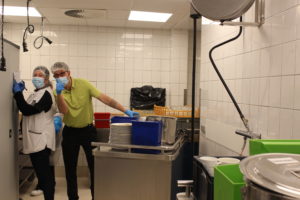
Early 2021, the City of Ostend launched a campaign to combat food waste in the city’s central kitchen. One year later, it appears that food loss has been reduced by 40%, representing savings of nearly 50,000 euros per year and a reduction of 112 tons of CO2 emissions.
One third of the food produced worldwide is wasted. During the production process, transport, in the store, but also to a large extent in the kitchen and on our plates. The city of Oostende wanted to examine in its own central kitchen where food goes to waste and how this can be avoided. Because wasting food is not only a waste for those who produce and prepare it, it also has a major financial and climate impact.
The measures against food loss fit within the European project Foodshift 2030, which aims for a more sustainable food system.
The trajectory in collaboration with the Province West-Flanders and FoodWIN
The central kitchen produces meals for the staff and for many care institutions (AZ Sint Jan hospital, two residential care centers, five day-care centers and the eight meeting centers). This accounts for about 1,400 lunches, 750 breakfasts and 750 evening meals. The measurement on food loss was carried out under the professional guidance of FoodWIN and received financial support from Province of West Flanders.
A first baseline measurement was done in March 2021. From these measurements it became clear where the losses are and what actions could be taken. Examples are more accurate weighing and fine-tuning of all portions, specifically tailored to the target group (children, elderly, staff, etc); better agreements with all customers regarding absences and meal requests, for example, in day care centers and hospitals; regular consultation with the customers’ nutrition managers, for example on the distribution of meal times so that they are not too close together. A targeted purchasing policy and a new stock management system will also help reduce losses.
Saving 50,000 euros
A second measurement took place in February 2022. Thanks to the actions taken, the kitchen managed to reduce food waste by 40% in ten months. This saves no less than about 50,000 euros per year and avoids 112 tons of CO2 emissions.
The greatest progress was made in the day care centers. After the second measurement, more than 50% less food was wasted. The actions taken (such as adjusting the portions, especially for soup and vegetables which were given too large portions) had a clear impact. The biggest progress is seen in a huge reduction of buffet leftovers, on which the actions also focused.
The biggest losses are, also in the second measurement, still in the residential care homes and the hospital. In the residential care homes, the losses are divided approximately equally between buffet leftovers (45%) and plate leftovers (55%). Soup takes the largest share of buffet residues in both measurements. A better distribution of when soup is given, for example in the evening, could lead to smaller losses because then the meals in the first day half would not be so close together. The portions of starch are slightly higher than the recommended amount (167 g instead of 125 to 150 g). Reducing this portion will also reduce the losses.
In the hospital, the actions in pediatrics in particular had a great effect. There the portions were clearly too large. Also a better registration system of the parents who stayed for dinner led to fewer losses. The same applies to clearer agreements on meal requirements for new patients (e.g. staying sober in function of examinations).
First Alderman Björn Anseeuw, responsible for Central Purchasing: “We are very happy with this progress. We have an exemplary function in looking at how as little valuable food is lost as possible. This requires the cooperation of all people in the organization and all links, from kitchen staff to buyers and customers.”
“Measuring is knowing. This was immediately made very clear with this trajectory. Reducing food loss is also an important objective in the food strategy of the city of Ostend. In addition to a positive impact on the climate, the net money savings are also a plus, especially now that food prices are increasing everywhere,” adds alderman Silke Beirens.
Surpluses will not go to waste
The surpluses that remain are distributed through various channels. Larger quantities are donated to the non-profit food aid organization Lichtbaken. The City is also setting up its own Too Good Too Go system for staff, selling prepared daily specials at a discounted price.
Inspiration moment for mass kitchens
On Thursday 21 April 2022, the City of Ostend organized an inspiration event for professional kitchens in Ostend. With this event the city also wanted to inspire other large kitchens to take action and learn from each other.
And the City itself will continue to look for actions to further reduce the losses and will continue to measure the food. Good communication with all buyers and customers is crucial in this respect.
Food Waste Award Winner
During the Food Waste Fest 2022 organized by Foodwin, the city of Ostend won the Food Waste Award in the category public authorities, for their efforts in reducing Food Waste.
Want to know more?
About the food strategy in Oostende? https://www.oostende.be/oogst
About Foodwin? https://foodwin.org/
The post The central kitchen of Ostend lowers food waste by 40% appeared first on FoodSHIFT 2030.
]]>The post Deep dive into Ostends’ Food Strategy ‘Oostende Oogst’ appeared first on FoodSHIFT 2030.
]]>With this approved food strategy, Ostend tackles six strategic goals (and twenty operational goals). The aims are to:
- Provide space for sustainable and local food production
- Support and initiate short supply chain production and distribution
- Promote consumption of healthy, local and fair produced food
- Consolidate social added value of food initiatives
- Reduce, redistribute and reuse food(related) waste
- Set up a good food governance structure (e.g. food policy council) for the City of Ostend
Since the launch of the Food Strategy, Ostend has been very busy operationalizing it! Lets’ take a deep dive into the activities linked to the goals of ‘Oostende Oogst’:
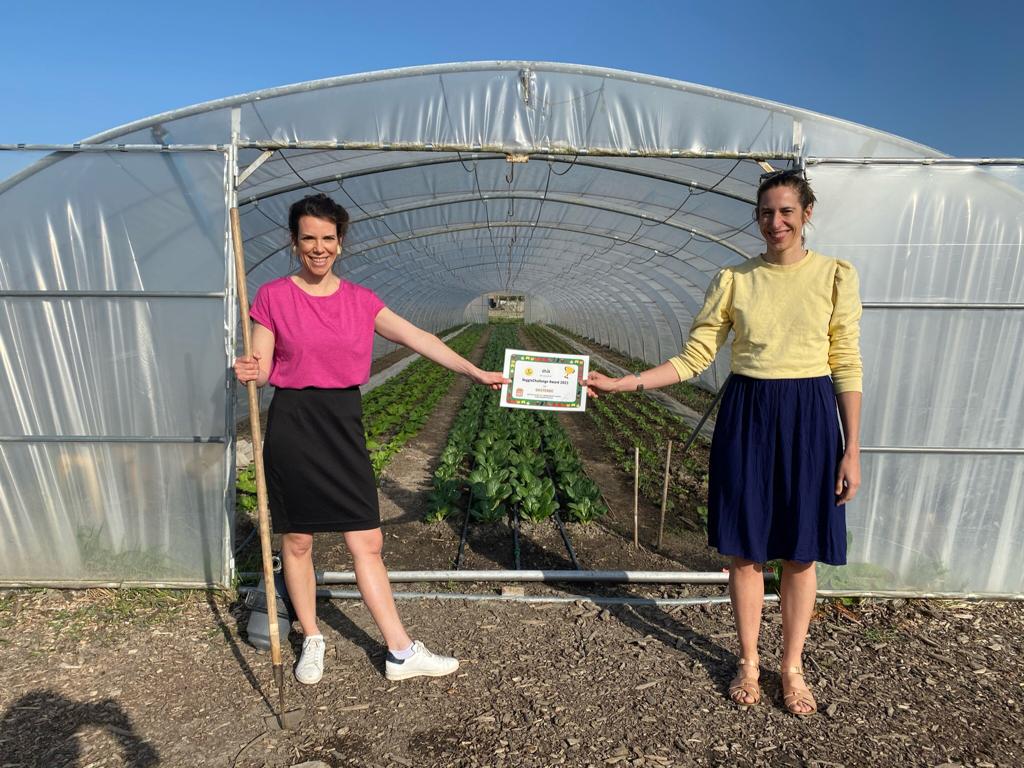
- The ‘VeggieChallenge’ occurs each year in March, since 2021. The VeggieChallenge is a free online coaching program that inspires citizens of Ostend to reduce their meat-intake during 30 days and replace it by veg(etari)an alternatives. In light of this challenge, Ostend organizes multiple activities in the field to stimulate citizens to eat less meat and more plant-based: cooking workshops, a veggie quiz, contest, etc. Restaurants and local companies also engaged in the challenge and organize actions to increase knowledge on the vegetarian lifestyle amongst citizens. Check the website of Ostend City for an overview of the companies and their actions: Doe de Veggie Challenge! – Stad Oostende. It goes without saying that the ‘VeggieChallenge’ is beneficial for the body, the planet & the appetite. In addition, Ostend also recently signed the Green Deal Protein Shift that has the ambition to shift to less meat (40%) and more plant-based diets (60%). What better effort to achieve the overall FoodSHIFT2030 project goal to shift to less meat and more plant-based diets’?
- Lets’ give a shout out to short supply chain products: Ostend also relaunched their bi-weekly farmers’ market where citizens can buy fresh, local & seasonal products directly from the farmers. The market has something for everyone: vegetables, fruits, dairy, bread & meat (Boerenmarkt – Stad Oostende).
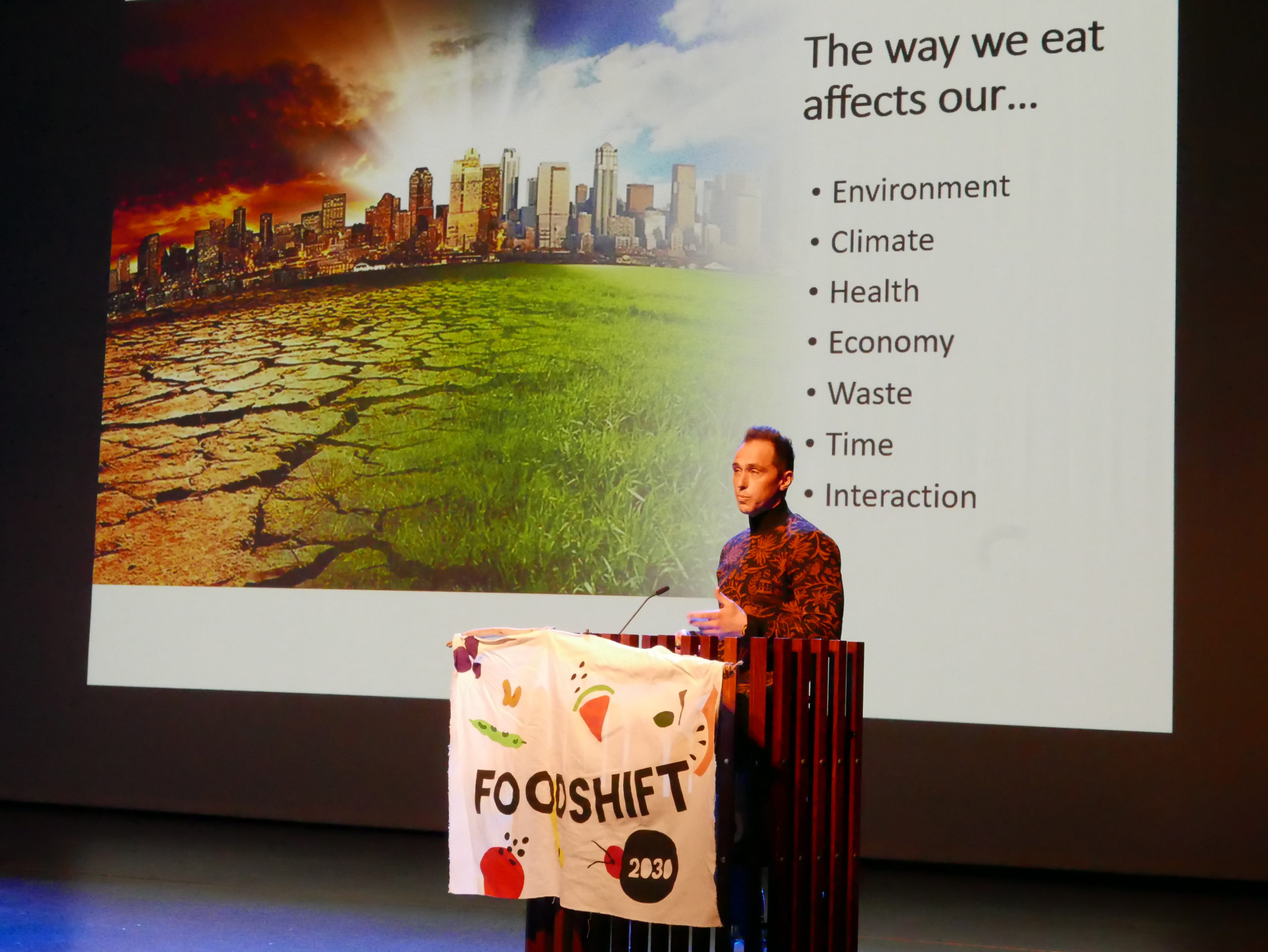
- Ostend has the ambition to launch a food policy council by 2024. A food policy council ensures that goals & actions of a food strategy are being operationalized by finding political support, foreseeing enough resources and designating responsible actors for all the actions. In the run-up to the food policy council, ‘Food Forums’ will be organized. A Food Forum is an event where all relevant food system actors are present to get acquainted with each other and to discuss the current food environment (what is missing, which important actors are missing, etc.). In February 2022, the first edition of the Food Forum took place. The Mayor of Ostend, the Elderman of Ostend and several innovators (i.e. stakeholders active in the food system) gave a speech on the importance of sustainable, local & healthy food. Afterwards, there was room for networking and food dialogue tables – where participants could discuss several food related topics linked to Ostends’ food strategy – were being held. Ideally, a food forum will be organized each year and eventually will grow into a food policy council with a solid structure – meaning that it will either be embedded in the local government or will operate as an independent organ. The food policy council will consist of different experts, researchers, entrepreneurs, volunteers, etc. active in the field of food systems, education, economics, health, etc.
- Citizen engagement is the corner stone of the FoodSHIFT project, meaning that citizens should be involved in all phases of the project (stimulating citizen driven innovation in business and civil society, citizen science, citizen based food governance, etc. in the participating countries). Ostend tries to accomplish this by setting up a citizen engagement trajectory where we try to engage citizens as much as possible in our food strategy. By doing this, we hope to increase knowledge and awareness amongst citizens on the importance of sustainable food(systems). In this regard, Ostend recently launched a survey aimed at citizens. The survey gauges their interest in 1) the Gardens of Stene, an agricultural park where many activities related to the food strategy occur, 2) different aspects related to food (e.g. cooking, social value, knowledge sharing) and 3) being involved in the food strategy by brainstorming on actions linked to the food strategy. In the future, Ostend will also organize food dialogue tables where citizens can discuss the food strategy and its related activities more in depth.
These are just a few of many activities Ostend engages in – there are many more to come. All with the ambition of transforming the European food system towards a low carbon, circular future, including a shift to less meat and more plant-based diets.
The post Deep dive into Ostends’ Food Strategy ‘Oostende Oogst’ appeared first on FoodSHIFT 2030.
]]>