The post Barcelona’s story: Food Tech 3.0 Lab appeared first on FoodSHIFT 2030.
]]>Four years ago nine city-regions took on the challenge to establish FoodSHIFT Accelerator Labs. In this final blogpost, the Barcelona Lab reflects on the journey and development made during the whole project, through an interview to the Barcelona Lab coordinators. Explore the Transition Toolkit to to learn more about the other Lab’s experiences, Barcelona’s city’s reports on innovation and governance and more.
Building on the previous summary of the acceleration programme for local food tech innovators, Barcelona FAL has now started an updated version of its work, which continued throughout the FoodSHIFT 2030 project.
Key take-aways: Summary
- Barcelona’s focus was on accelerating citizen-driven, local food tech projects
- They joined the project to help connect Distributed Design and the maker movement with the food system
- They were proactively trying to reach different types of stakeholders, particularly focusing on communicating a co-created vision of food technology through a variety of events and
- Challenges were for example the general unfamiliarity with food tech and a lack of public understanding of local, citizen-driven food tech beyond the mainstream food tech, supporting innovators who were mostly in need of funding and support on political issues, which weren’t areas of support our pilot could assist in, and the lack of knowledge and support in the area of business development in the early idea stages
- Greatest successes were for example to develop a definition of food technology that was based in co-creation practices and the needs of the local community and seeing local innovators thrive
- For a city wanting to embark on a similar journey, the recommendation is to go slow when integrating in the local food network and identifying and co-defining food tech and possible responses with the local community. Have a look at what your local maker space is doing!
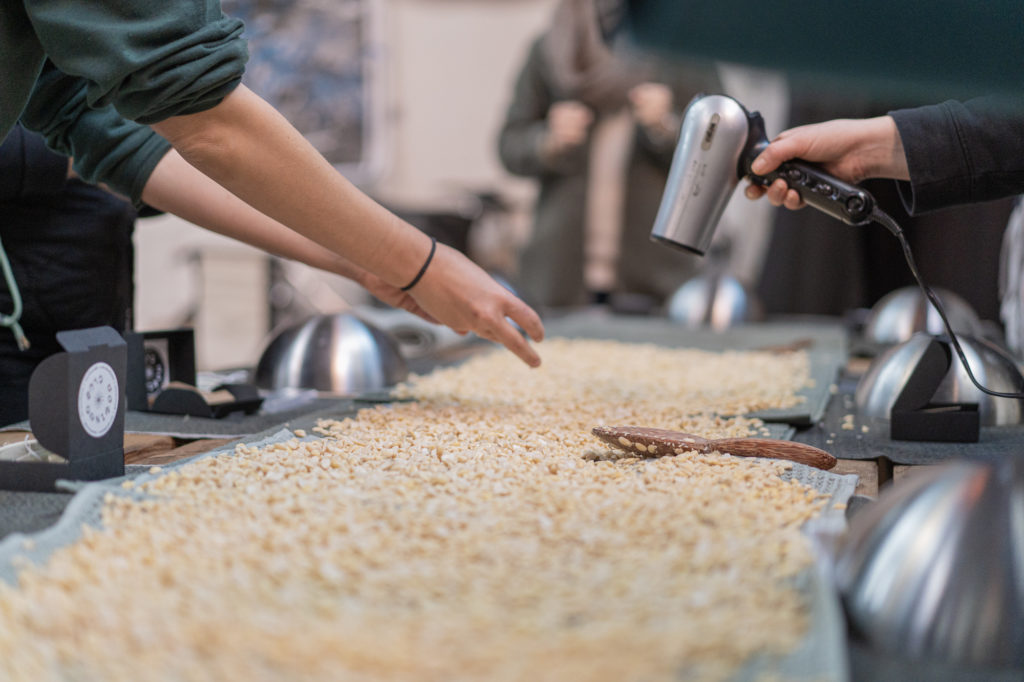
Interview to the Barcelona Lab Coordinator
? Learn more about this story by reading the interview with the Fab Lab Barcelona team:
1.What was your FAL focus within FoodSHIFT2030?
Our focus was to support the technological and social development of emerging food tech projects (local key and developed by citizens) in any of the stages of the local food system.
2. Why did you join FS2030 initially?
In one hand, to better understand how the maker movement could integrate and collaborate with the food system. One the other hand, one of our creative talents in the Distributed Design Platform network helped us connect to the opportunity of joining the project, believing it was a way to connect Distributed Design and maker principles to food.
3. How was your process of working with your focus area within the duration of the project?
The process was eye-opening. It was exciting to begin to link to the local food ecosystem as well as getting to know the work that our peers in the maker movement are doing in the realm of food.
The process was quite revealing. We have been able to observe that there is an outstanding interest in the local population aimed at developing technological-social projects and that in fact, they need support to transfer the idea of something abstract to the concrete terrain through prototyping. For us, this discovery process was organic and quite revealing in order to design our food strategy based on this information.
4. Think for example of how you started your FAL, the steps you took to drive your area of focus forward and why you took those steps, the people and organisations you involved and why
- Challenging– from getting to know the local ecosystem outside of food tech, it seems they needed the most support in funding and political issues, which weren’t areas of support our pilot could assist in
- However, the food tech initiatives that we onboarded, we were able to support them in the areas of commuinty development and technology
- Fab Lab Barcelona was the host, leader, and secretary so our capacity to reach out to certain stakeholders was more challenging– especially within the political realm. However, we were proactive in trying to reach different types of public, particularly focusing on communicating a co-created vision of food technology (together with our advisory board) through manners like local workshops, the innovation and stakeholder conference, and Food Tech 3.0 showcase during 2021, the year Barcelona was the World Capital of Sustainable Food, other city events, like La Mercé, and through the Food Tech 3.0 Gitbook.
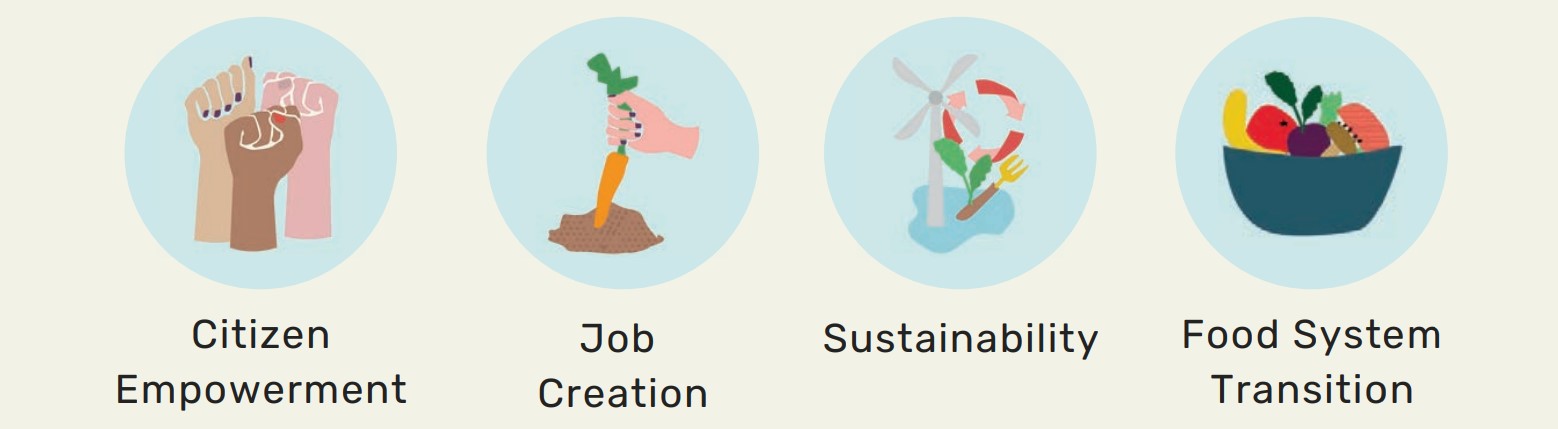
5. How did you work within the different impact pathways?
Citizen empowerment
- Everything that we did to transfer the knowledge from our own Lab, as well as trying to connect the knowledge from our network, including our FELs and the Fab Lab and Fab City network
- The acceleration program– supporting initiatives in going from an initiative to a community champion that can continue empowering others
- Gitbook
- Webinars about community and technology
- Participation in Barcelona’s local festivities (La Mercé, Festa de la alimentacio sostenible 2022)
- MakerFaire Rome, Bali Fab Fest, MakerFaire Barcelona
Job creation
- Stakeholder conference and Food Tech 3.0 Showcase employed all local providers within Barcelona´s food ecosystem
- The gifts and table cloths from la taca d’oli
- LEKA cooking with food from Ma Condiments and Vilagreens
- AbonoKM0 composting everything
Sustainability
- Supporting small, local actors is social and environmental and economic sustainability
- Connecting the innovators with other actors in the local ecosystem
- The Gitbook
Food System transition
- Not only bringing food tech to the conversation to local actors that typically don’t see themselves with food tech, but helping them envision a new type of food tech that doesn’t follow the typical big tech narrative
- Engaging makerspaces and Fab Labs with the food system transition
- Horizontal scaling through our work with FoodSHIFT pathways in trying to bring our work from foodshift2030 into classroom curriculum
6.What were the greatest obstacles in your process, if any?
Another obstacle was the general unfamiliarity (e.g. at a consortium level and while meetinglocal stakeholders) with food tech and when there was familiarity, that it was associated with mainstream food tech, like meat being grown in petri dishes or big ag like Monsanto.
Time availability and timings: Our community often felt like they were a brain drain and were not getting direct benefits back in a timely manner. Additionally, the lack of funding for the participation of the advisory board, especially given the long timeline.
The 2019 Covid crisis was one of the biggest obstacles for the acceleration programme, since we couldn’t meet in person. This was a constrain for the social learning process and knowledge sharing, especially between innovators.
The lack of funding mechanisms was another obstacle to helping the initiatives jump from the prototyping phase to the commercial phase. Another obstacle was the lack of knowledge and support in the area of business development from the early stages, since that is not the focus of FAL Barcelona in itself. However it was evident that if we want to bring in innovations successfully in the future , it is necessary to have experts dedicated to the business development area.
7. How did you overcome those obstacles or how are you planning on overcoming them?
We learned a lot through peer exchanges with the 8 other FALs, as well as the extended consortium, on how to address these challenges.
Then, more specifically, as mentioned in earlier questions, we worked tirelessly to co-create a new definition for the food technology (creating the “food tech 3.0 concept”) that the local food ecosystem wanted to see with the invaluable input of our advisory board and previous related projects’ approach at the Fab Lab. Then the question from there was working on education and knowledge transfer about that vision, which we did through all of the in-person and online events we took part in at local and global levels, and particularly in the Gitbook resource we put together, which we hope will continue to inspire others who are working in developing food technology that is citizen-driven, open, ecosystemic, just, and regenerative.
Regarding funding, we tried to be judicious when we asked for unpaid stakeholders to contribute and found ways to try to compensate them as we could. We also allotted 300 euros per innovator for their acceleration process, to be dedicated to technical materials or workshop/event participation.
With business, we are looking to the broader Fab Lab and Fab City Networks, including our three FELs in Hamburg, Milan, and Paris, as well as the Distributed Design Platform community, particularly to find answers about opensource business models.
8. What or who really helped you in your process?
As mentioned before, we learned a lot through peer exchanges with the 8 other FALs, as well as the extended consortium.
Our advisory board’s contributions were absolutely invaluable and we were fortunate to be able to do knowledge sharing exchanges with them. They helped us co-create the definition of food technology that reflected what the local community needs– two examples that are particularly important here were involving “low tech” and ancestral wisdom as concepts of technology.
Our innovators were also superheroes. They educated us on different types of food technology, shared their methods and practices, enriching each other’s work as well as our understandings.
Our FELs– the folx at Ars Longa & Fab City Grand Paris in Paris; the New Production Institute and Fab City Hamburg in Hamburg; and Open Dot in Milan. Together, we are supporting, developing, and spreading the word about food technology developed through fab labs, makerspaces, and fab cities, and sharing about the methodologies that we use.
9. What resource (website, book, newsletter, organization …) did you use the most to propel your FAL focus area?
We relied a lot on the collective intelligence of the local food ecosystem to establish our FAL and visibilise the Food Tech 3.0 concept. We were also inspired by Barcelona’s city activities during its tenure as the 2021 World Capital of Sustainable Food, in which we were active participants. This culminated in the Stakeholder Innovation Conference and Food Tech 3.0 Showcase, which we used as moments to share the Food Tech 3.0 concept, the potential for makerspaces and Fab Labs to engage with food, the work of our innovator ecosystem, and our advisory board’s perspective on how food tech 3.0 fits into Barcelona’s local narrative.
In order to continue to exchange knowledge throughout our ecosystem (i.e. Fab Labs, makerspaces, and Fab Cities), and build on the Food Tech 3.0 concept horizontally, we also generated a digital resource: The Food Tech 3.0 Gitbook.
This is a living resource that compiles inspirations, learnings, examples, and further conversations around food technology through our work with the Food Tech 3.0 advisory board, our innovators, our FELs, the FoodSHIFT2030 community, Fab Lab Barcelona’s own existing and past projects, and more.
The purpose of the gitbook is to share a vision for food technology which places citizens at the center of the food system transformation.
Who is this resource for?
?For individuals: we hope this resource serves to help you imagine a present in which food technology is an accessible asset you can use to produce, consume and recycle food yourself.
?For communities: we hope it can serve as an entry point for connecting you to food technology that might meet your needs.
?For food technology makers: we hope it gives you ideas on how you might engage with tenets of food citizenship and citizen-driven innovation, open source, holistic sustainability, justice and equity and working ecosytsemically.
?Finally, for Fab Labs, makerspaces & Fab Cities: we hope it helps you understand the potential role our spaces can play in advancing food technology for a food system transition
10. How was it to work with local innovators in your city region?
Very inspiring– we really managed to find areas of development together in an organic and collaborative way, with truly surprising impacts such as the reuse of organic waste, the production of food with new technologies, social construction from disseminating new forms of food consumption and production or return to ancestral pracitces ways such as fermentation. In short, it has been rewarding, motivating and fruitful.
We also often felt frustrated on behalf of them. Through getting to work with them, we saw how many bureaucratic obstacles and limitations there are to working with food, and particularly developing food technology. At points, it was also the absence of legislation that caused issues. Our hope is that we can continue to support the food tech narrative to influence necessary policy making by raising awareness on developing more friendly bureaucratic and legal processes for makers and innovators.
11. What has been your greatest achievement or result from the project?
Developing a definition of food technology that was based in co-creation practices and the needs of the local community, as opposed to the definition we often encounter that makes us think of big agriculture (instead of polyculture microfarms), data (instead of citizen generated data), lab generated meat or produce, etc. We want to see food technology that:
Are community-based & citizen-powered: initiatives respond to an actual need within a community and prioritise empowering their communities and creating food citizenship, taking stakeholders from passive consumers to agents of action;
Are regenerative: providing positive environmental, social and economic outcomes;
Employ open design practices: either (or all) the product, business model, or governance is open access and/or open source, enabling replication & hacking
Further equity: Supporting intersectional equity and accessibility at the nexus of gender, cultural, racial, and economic lines
Operate in an ecosystem: systemic innovations and systemic partnerships, and especially the opportunity to partner with other types of tech initiatives (i.e. city/rural, high tech/low tech, for profit/non-profit, etc. partnerships)
Within that, it was also being able to support innovators to further develop their tracks of community and technology. Seeing our innovators begin to communicate their narratives, reach new communities and make new connections– like Gaia Espirulina starting on Instagram, getting engaged in the local community, and even adapting his tech to the needs of the community– was absolutely amazing.
12. What new opportunities do you see for the food system in your city region in the next 4 years?
Particularly, we see new opportunities for the maker movement and network of Fab Labs and Fab Cities to continue to intervene in the food system– sharing knowledge on how to further develop initiatives’ community and technology approaches. Through FLB’s recent efforts in the EU project CENTRINNO, we are currently part of an emerging collective of makerspaces, including the local Ateneus de Fabricacio, Akasha Hub, MakerZone, Maker Convent, etc., that are working on how we can help relocalize making and crafts to Barcelona. This is creating a new space where we can help to connect making and food and putting communities in touch with makers to help develop food responses to meet their needs.
In relation to Make Works, DD community and NEB, food tech innovators will have the opportunity to find new collaborations accross different EU countries.
Barcelona is an open city and is like a big laboratory for initiatives at all different points of the food systems. The directions given by the city are openly promoted via an official website acessible at: https://www.alimentaciosostenible.barcelona/es
13. What advice would you give to other city regions who want to embark on a similar journey?
We had a bottom-up approach when it came to our journey. So in the first phase of the project, we learned a lot about going slow when integrating in the local food network and identifying and co-defining food tech and possible responses with the local community. That would be particularly important for makerspaces, Fab Labs, and Fab Cities that want to begin to connect with food.
For cities and citizens that want to connect to Food Technology from a more inclusive perspective, we would say to start by looking at your local makerspaces or Fab Labs! Our processes are geared around openness, collaboration, regeneration, and working ecosystemically and that will help communities and cities uncover food tech approaches that are truly citizen-driven. Cities can also check networks like the Distributed Design Platform or MakeWorks to try to locate local actors that are already working on food production and transformation in their areas and that share these principles.
14. If applicable, are you seeking any collaboration opportunities going forward i.e., in terms of collaboration with other cities or organizations, advice on certain topics, network?
We are continuing to see how we can collaborate with the Fab Lab and Fab City networks on continuing to understand food technology within the maker movement.
We are also collaborating with the local consortium here born out of CENTRINNO’s work that we mentioned before.
Additionally, we are collaborating with the Distributed Design Platform community, which includes over 2600 creative talents and 17 members from cultural, design, and research institutions and makerspaces in 13 countries.
Lastly, we are continuing to work with the MakeWorks Platform to connect local food transformation and production makers to local clients. MakeWorks operates in 10 city-regions in the world and is a growing network.
We are trying to foster collaboration and connections through the global #food Discord channel that’s hosted by the Distributed Design Platform. And through other European funded projects such as FoodSHIFT2030 Pathways and FOSTER.
15. If ok, please provide contact details so that others can reach out if they’d like to know more.
Alessandra at [email protected]
Stay tuned at Fab Lab Barcelona and follow their social media channels
Check out the previous Barcelona’s blogposts:
The post Barcelona’s story: Food Tech 3.0 Lab appeared first on FoodSHIFT 2030.
]]>The post Food Tech 3.0 Updates: GitBook coming soon! appeared first on FoodSHIFT 2030.
]]>![A screenshot of the Food Tech 3.0 GitBook webpage is open to the community sub-section titled, “What is a community & how do they function.” It includes a still of Food Tech 3.0’s recent webinar on Transforming the Food System from Communities in which two people are interacting around food next to the title ‘Mutual Food Assistance’]](/wp-content/uploads/2023/05/gitbook-image-better-1024x556.png)
The Food Tech 3.0 GitBook is under development! We’re looking forward to releasing the GitBook in June in time for our workshop at the re:publica Festival in Berlin.
At the Food Tech 3.0 FAL in Barcelona, the Fab Lab Barcelona team is developing a new tool on how makerspaces, Fab Labs and Fab Cities can support the development of food initiatives, including tools and best practices for innovators and communities. This resource is a compilation of inspirations, learnings, examples, interactive tools, and furthering conversations around food technology. It is presented as an interactive online book, on the platform GitBook, which keeps in line with both the Food Tech 3.0 and Fab Lab Barcelona values of open source and freely accessible.
Target Audience: Who do we envision using the GitBook?
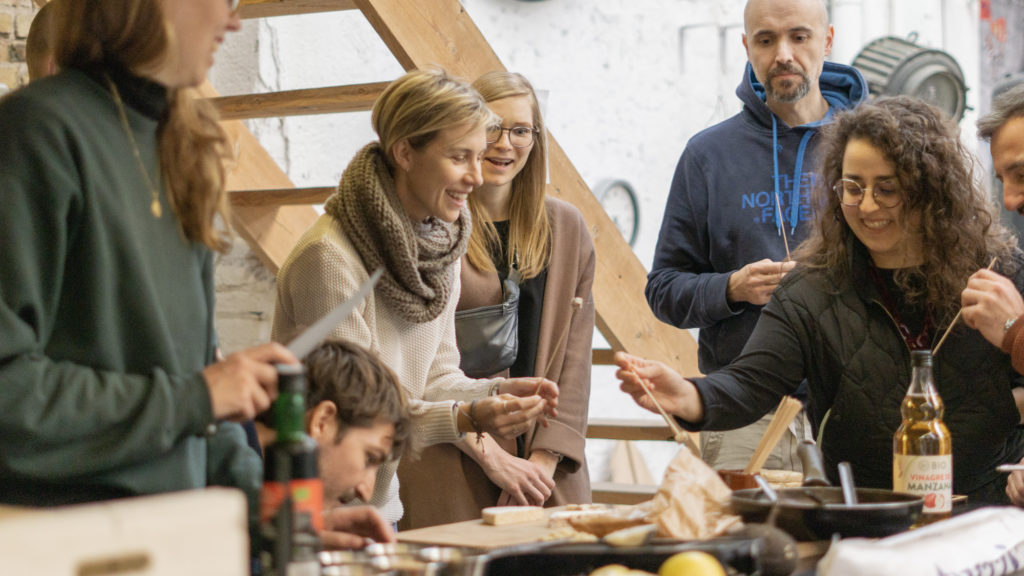
Members of the Food Tech 3.0 FoodSHIFT Enabler Lab joined a workshop presented by Food Tech 3.0 innovators, Domingo Club. Workshop participants represented various stakeholder groups that the GitBook aims to target.
The Food Tech 3.0 GitBook is imagined to serve a variety of audiences. We believe it has information and resources for:
Citizens:
- We hope this resource serves to help you imagine a present in which food technology is an accessible asset you can use to produce, consume and recycle food yourself.
Communities and civil society:
- We hope it can serve as an entry point for connecting you to food technology that might meet your needs.
Food technology makers and small businesses:
We hope it gives you ideas on how you might engage with tenets of food citizenship and citizen-driven innovation, open source, holistic sustainability, justice and equity and working ecosytsemically.
Policy makers and municipality workers:
- We hope the GitBook can inspire you to continue supporting alternative food technologies and local food communities and to understand how and why to support the innovative work of makerspaces, Fab Labs and Fab Cities at this intersection
And finally, for makerspaces, Fab Labs, & Fab Cities:
- We hope the Food Tech 3.0 GitBook helps you understand the potential role our spaces can play in advancing food technology for a citizen-driven, regenerative, and ecosystemic food system transition
Food Tech 3.0 GitBook Features
The GitBook includes a wide range of resources, from visions of the future to community tools, webinars on food tech to examples of platforms empowering food communities. Some of the key features in the GitBook include:
? Understanding what food technology means for Fab Lab Barcelona and Food Tech 3.0
? Why and how makerspaces, Fab Labs & Fab Cities can support food technology initiatives and their communities
? A look into how Fab Lab Barcelona identified, matured, combined, and upscaled food technology initiatives and tips for makerspaces looking to do the same with their own local communities
? Best practices and interactive tools to support innovators and communities approach Food Tech Accelerator Program’s pillars: community, technology, and business.
? A series of conversations with professionals in the field ranging from how to create a shift in consciousness in order to create a paradigm shift in our food system to how initiatives can integrate collaboration into their work from the very beginning
? Examples of food tech innovators putting this all in practice, including examples from our Food Tech 3.0 Enabler Labs (FELs): Fab City Hamburg (Hamburg, Germany); Fab City Grand Paris (Paris, France); Open Dot Lab (Milan, Italy).
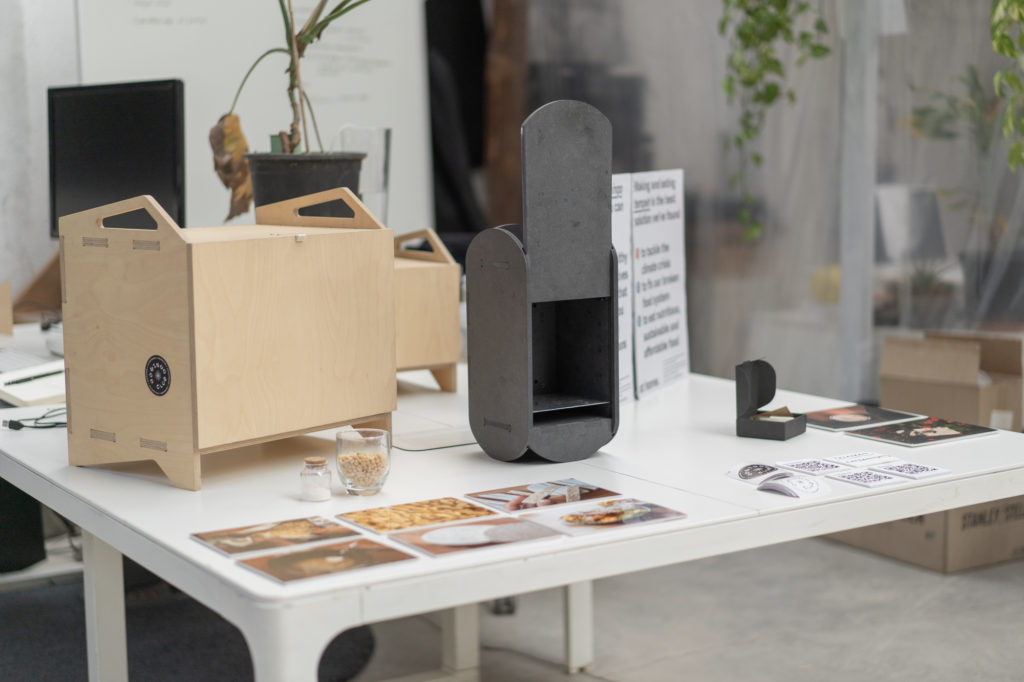
The Domingo Club Incubators during a recent workshop with the Food Tech 3.0 FELs in Barcelona.
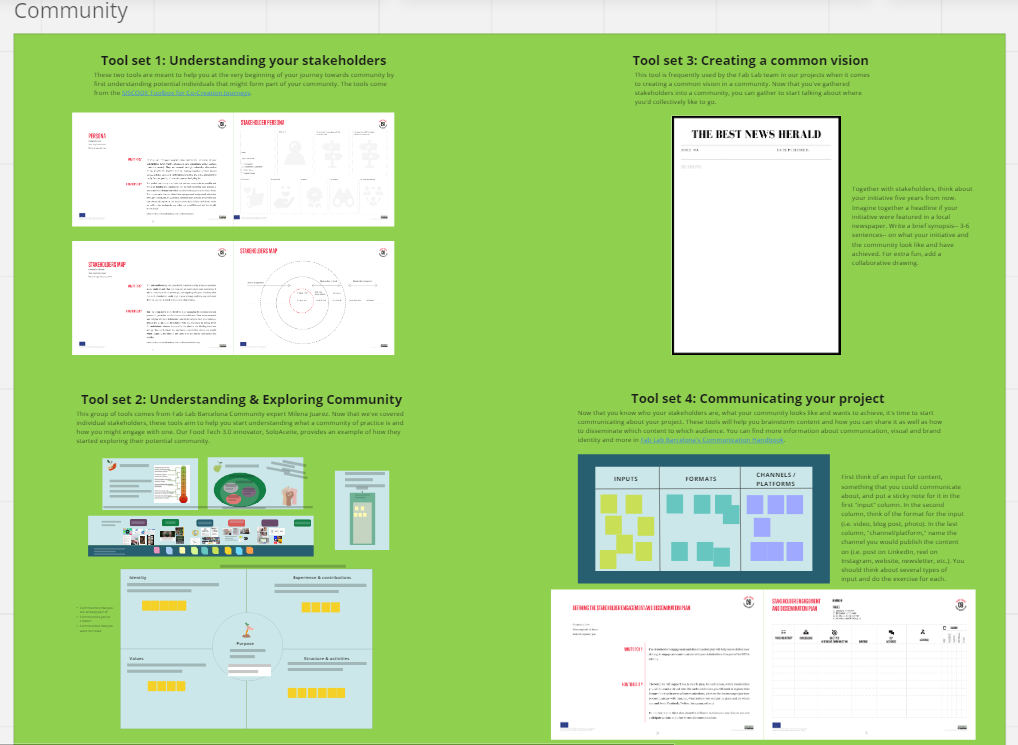
Screenshot of the tools for understanding communities. The tools are hosted on MIRO and the templates can be copied by users to help them identify, understand, grow and communicate with their communities.
How you can get involved
The Food Tech 3.0 Gitbook’s planned release is for June, though the resource is a living document and will continue to be updated with new findings, approaches, and best practices.
But there are two exciting things you can do while you eagerly wait its arrival:
?? If you’re interested in learning more about Food Tech 3.0’s approach and the upcoming GitBook, you can register for the “Envisioning distributed food hubs with citizens, Fab Labs & Fab Cities” workshop, which will be part of the re:publica festival in Berlin this coming June 5th-7th. During the workshop, participants will use a future design tool and the Food Tech 3.0 GitBook to explore how to harness makerspaces, Fab Labs or Fab Cities to create a distributed network of social food hubs. The workshop is geared toward citizens who want to reclaim our food system, food innovators who are designing ways to do it, and makerspace, Fab Lab or Fab City participants that design spaces to recuperate the food system.
For the workshop, the Food Tech 3.0 team will join forces with the Distributed Design Platform, an exchange and networking hub for the emerging field of distributed design. Distributed Design Platform is also an EU funded project.
? You can also join the #food channel on the Distributed Design Platform’s Discord, where we’ll keep exchanging about how we can make citizen-centered, regenerative food tech together with the Distributed Design Platform’s community! (This channel will be used instead of Food Tech 3.0’s original Discord, so make sure to migrate to the new space.)
?? Help us map the Food Tech x makerspace ecosystem by participating in the mapping survey, which you can find here. Participants may be featured in the GitBook or shared about on the #food discord channel.
? And of course, check in with Fab Lab Barcelona to stay up to date on our food journeys!
We cannot wait to share the Food Tech 3.0 GitBook with you! Stay tuned for more ?
The post Food Tech 3.0 Updates: GitBook coming soon! appeared first on FoodSHIFT 2030.
]]>The post Multiplying the impact – sharing experiences: Peer-to-peer learning in FoodSHIFT2030 appeared first on FoodSHIFT 2030.
]]>Keywords: peer-to-peer learning, knowledge transfer, network
The peer-to-peer learning approach is learning at equal level, where people with similar tasks, aims or challenges share experiences, ideas and knowledge with each other without hierarchies.
Peer-to-peer learning in FoodSHIFT2030
There are many peer-to-peer learning formats, some of which have been gathered within FoodSHIFT2030 in deliverable 5.3 under the title “Multiplying the impact – sharing experiences: training and guidance materials for knowledge transfer”. This collection primarily addresses the FoodSHIFT2030 Accelerator Labs (FALs) and aims to facilitate peer-to-peer knowledge transfer of experience with food system innovations among all FALs as well as among the FALs and the FoodSHIFT2030 Enabler Labs (FELs). However, it can also serve as a diverse source of inspiration for actors in the field of mutual knowledge transfer beyond the project’s lifetime and thematic scope.
The document is available for download in the “resources” section of FoodSHIFT’s website among various further inspiring outputs of the project: https://foodshift2030.eu/resources/.
On the one hand, the material contains peer-to-peer learning formats in general description which can be applied in a variety of situations and knowledge transfer environments. On the other hand, there are knowledge transfer formats that were developed or/and applied specifically within the FoodSHIFT2030 context.
It is an elementary aspect that not only the knowledge transfer formats themselves follow the peer-to-peer approach, but also the compilation of the material took place in co-creation, a collaborative process of knowledge generation: hereby, the FALs generated knowledge for each other, such as good practice cases from within the project as well as specific training material from a FAL’s individual experience. Further, in an iterative bottom-up approach which required the intensive involvement of the FALs, their needs, strengths and challenges were identified, for instance during consortium meetings, in interviews and in brainstorming sessions.
Thus, in the spirit of peer-to-peer learning, most of the training and guidance material was not unilaterally created by FoodSHIFT’s WP5 team for knowledge transfer but arose from the condensed outcomes of these assessments. The WP5 team, the knowledge brokers, hereby guide this knowledge generation to ensure that the knowledge is being transferred within and beyond in formats suitable for the respective target groups.
An exemplary format: a series of video interviews
In addition to the tools for networking, information, and knowledge transfer, as well as best practices and implementation examples from FALs and much more, the collection includes a series of video interviews in which FALs have their say:
Recorded at the consortium meeting in Brasov, they spontaneously talk about their innovation principles as well as their experiences in the project with a focus on the interaction with the FELs with whom knowledge transfer and experience sharing is taking place very specifically within the project.

© Annika Frühbeißer
In addition, an introductory animated video has been created that explains a little about the FALs and their activities in FoodSHIFT2030. You can find the four video interviews and the introductory video on the YouTube channel of FoodSHIFT2030 in the playlist: Exchange visits: Knowledge Exchange FAL to FEL.

© Annika Frühbeißer
Shooting and editing video requires some training, and a course is recommended. However, if once the necessary know-how has been acquired, all you need is a smartphone with a stabilisator (a so-called gimbal), a filming and editing app as well as a clip-on microphone to professionally produce your own videos.
Videos are establishing as a knowledge transfer format since they correspond to the zeitgeist and offer many advantages:
- Knowledge can be conveyed in a highly compressed and easily understandable way through video content.
- In addition to real-filmic elements, animation elements allow creative freedom and add a framework and structure to a video; for instance, we used the simpleshow.com programme in FoodSHIFT’s videos.
- Knowledge can be accessed freely at any time, the knowledge flow can be paused and repeated if the videos are published on public platforms such as YouTube or a project website.
- Onward dissemination by the viewers, even on a large scale, is low-threshold and can have a great impact (social media).
- And last but not least, it is great fun to talk to your peers and gain new insights whilst you are shooting the videos!
Watch the series of video interviews here below:
The post Multiplying the impact – sharing experiences: Peer-to-peer learning in FoodSHIFT2030 appeared first on FoodSHIFT 2030.
]]>The post Innovators: Meet the people changing your food system appeared first on FoodSHIFT 2030.
]]>In these portraits, each of the 90 innovators has been profiled using compact descriptive section addressing the key activities and achievements so far as well as the near future perspectives under the heading ‘Looking ahead’. The one-page portraits are complemented by infographics on the impacts and the relevant contact details.
For quick orientation, the innovations have been categorized according to four innovation dimensions: product, process, social & governance. These dimensions enable us to identify what kind of innovations are being initiated across city regions and provide suitable, relevant support.
These rich examples give us a glimpse of how food system innovations can look, and how they can be effective in addressing elements of the food system, and the relevant stakeholders that are involved. Together, these innovators and related stakeholders form the Innovation Ecosystem in their city-region, which has the potential to redefine local food systems.
Supporting Innovations
In addition to these differing innovation dimensions, the Innovation Portraits also highlight the varying maturity levels seen among innovations. This maturity refers to the developmental stage of an innovation, which can be useful in identifying the needs and next steps that an innovator can take to bring an idea to life, from Eureka! moment to viable product or service.
Based on the maturity of an innovation, we can establish what kind of support would be best suited to the innovator. This support takes three main forms:
Maturing – advancing an innovation for better application as a solution. E.g. improved functioning of the innovation, better organizational structure, developing a business strategy…
Combining – linking of different innovations for strategic purposes. E.g. partnerships to facilitate new services, resource sharing, collaboration towards a common goal (coalitions, associations…)
Upscaling – increasing the impact and/or outreach of an innovation. E.g. increasing production, adding new products or services, outreach to new markets or communities, open-source knowledge sharing…
The Innovation Portraits provide us with an important reflection of the food system transition, in that many innovations are still early on in their maturing process, and in addition to the passion and ambition of the innovator themselves, will require targeted support and enabling conditions to thrive.
Providing us with snapshots of diverse innovators per city region, the Innovation Portraits also offer us an opportunity to consider how the Innovation Ecosystems in these city regions look. For example:
- Which innovators have (potentially) complementary resources, products or services?
- Which partnerships can be formed?
- Which innovators have a common interest or goal?
In particular, these questions can open the door to opportunities for combining, stimulating activity in the local Innovation Ecosystem. Looking at long-term perspectives, upscaling is a key acceleration mechanism for innovations that are at a high level of maturity and wish to increase their reach and impact.
Discover all INNOVATORS at a glance here!
Opportunities for Change
The 90 cases highlighted by the Innovation Portraits provides not only an inspiring portfolio of the diverse innovations that are actively contributing to food system transition, but also an example of how individual action, by individual innovators, can kick-start the development of an innovation ecosystem. These innovation ecosystems are fundamental in challenging the status-quo of food systems, and can generate awareness, interest and engagement with change. Through supporting the innovators highlighted in these Innovation Portraits, the FoodSHIFT2030 consortium hopes to accelerate the transition to a low-carbon, circular and plant-based food system in Europe.
Download the Innovation Portrait brochure here.
The post Innovators: Meet the people changing your food system appeared first on FoodSHIFT 2030.
]]>The post Press Release – What you do everyday matters appeared first on FoodSHIFT 2030.
]]>FoodSHIFT 2030 project has brought together 30 different organisations and over 120 project personnel with all kinds of backgrounds, expertise and experiences. This article forms a collage of the every-day works of individuals that were collected during lively and successful discussion at the recent Consortium Roundtable in Brasov, Romania (take a look to Brasov Press Release here!).

FoodSHIFT team in Brasov – photo credits to Brasov FAL
The TLDR inspiration – It is easy to feel overwhelmed, lost and disheartened when your every-day work is to ‘transform the food system’, But take a moment to acknowledge one’s own work, no matter how small, together with the collective works of many individuals moving in the same direction, Now the pathway to highly ambitious goals like transforming the food system become a little more illuminated, a lot less daunting and a whole lot more achievable!
In no particular order, here is a snapshot of the every-day works from 20 individual ‘FoodSHIFT’ers’ that form a collective effort towards a transformation of the EU Food System:
Education and Capacity Building
- ‘Counseling kitchens, pushing the agenda, developing tools’
- ‘Educational, social & environmental issues’
- ‘it’s all to support the central kitchen team!’
- ‘Teaching about carbon footprint (including food aspect), environmental impact assessment, using GIS for different spatial analysis.’
Citizen Engagement
- Participatory and action research methods. This includes design and methodological undertaking tailored to facilitate learning on social innovations for food system change. Outputs of research will seek broad communication with the multiple stakeholders of city-regions food systems.
City planning
- ‘Understanding cities’ needs for food system knowledge and tools and helping meet these needs; engaging diverse stakeholders in food systems science’
Communication
- ‘Organising public webinars and training workshops to disseminate knowledge and best practice, supporting the leaders of other work packages to produce assets which will be part of the legacy of FoodSHIFT’
Governance Planning
- ‘policy advice, implement concrete actions for the food strategy, involving stakeholders and citizens in the food system, organising campaign dealing with food (eg veggie challenge), contact with colleagues within the city departments on food, contact with key stakeholders in the steering group/possible future food council’
Management:
- ‘Strategic coordination of large, multi-disciplinary partnerships towards food system transition, continuously fostering relations for the identification and execution of common rewards, day to day implementation of flexible, innovative project management’
- ‘Following project meetings, Answering to related emails, looking into forthcoming actions, involvement & our obligations according to planning, working on deliverables’
Knowledge Sharing
- ‘Exchanging with FALs as the organizational hubs for food system transition in their efforts to reach out and place their activities in the wider picture of international policies and methods/tool applications.’
- ‘Stakeholder engagement, strategy development, knowledge co-creation and sharing, research and publishing, lots of e-mails’
- ‘I’m the link between the action and the Consortium’
Research
- ‘Mapping the ecological footprint of food consumption patterns in city regions’
- Data analysis of Brasov food system. Communication with FELs. Dissemination of FoodSHIFT2030 activities. Active participation in workshops.’
- ‘Development of guidelines and feedback loops for acceleration of innovation.
- Undertaking research on food system innovations’
- ‘Supporting the development and piloting of open source technology for the production, elaboration, consumption, and re- & upcycling of food in cities.’
On the ground actions
- ‘Barcelona FAL Food Tech 3.0 Lab Lead : Design, implement and monitoring each of the actions necessary to develop the FOOD SHIFT 2030 project, as well as support each of the project’s innovators. Follow in detail the assignment of the Budget of the FOOD SHIFT 2030 project. Contribute to the development of the food system through activities with the FELs established for Barcelona (Hamburg, Avignon and Milan)’
- ‘we organised CSA at our University, so I am engaged in this process and taking veggies & fruits boxes each week. I don’t eat meat (only fish) as well as not dairy (cow’s) products. Within Students Scientific Organization – we are obtaining extra funds to establish community gardens in participatory way.’
- ‘Living Lab approach, participatory workshops and research designs, strategy co-creation, public communication (podcasts, interviews, short movies, print media), qualitative and quantitative modelling approaches and other methods of social and environmental research’
The post Press Release – What you do everyday matters appeared first on FoodSHIFT 2030.
]]>The post Sustainable Food Festival in Barcelona appeared first on FoodSHIFT 2030.
]]>From last Friday, September 23 to Sunday, September 25, different gastronomic proposals, local initiatives, workshops, show-cookings and concerts came together in an event dedicated to #foodsustainablebcn.
FoodShift 2030 was no exception, with a stand dedicated to #technological innovation FabLab Barcelona, ??which belongs to the Institute of Advanced Architecture of Catalonia, shared with visitors how technology can help us redesign food production processes to make them more more effective and more holistic using the #circulareconomy, based on #morevegetableprotein, less and less on animal protein, taking advantage of local resources and thus being able to reduce CO2 emissions.
With innovations in different parts of the value chain, ranging from production, such as a pilot for the production of fresh spirulina called Gaia espirulina, the production of fresh sprouts for restaurants and local consumption such as Villagreens, the production of ferments from the hand of Domingo club, a club with the aim of teaching how to prepare tempe to urbanites from Barcelona and from all over the world. (We were even honored to have a visit from Driando from @tempemovement A movement that aims to spread the love for tempe(h), Indonesia’s best kept secret for producing affordable, nutritious and sustainable food)
The production of ferments for the restaurant sector such as Ma Condiments, until the end of the chain, using waste from the food industry as Naifactory did, which by reusing olive pits has designed a Biomaterial that has been called Reolivar and with which they manufacture decorative elements, packaging and graphic communication elements with the advantage of using them once the material has been pulverized and re-processing it for a new use.

Innovators: Maud Bausier and Antoine Jaunard with Diaandro Ahnan
Within the innovations we can also find initiatives to support the food transition from the education sector, such as POWAR and NUMID, which have educational workshops where they teach us to use technology to produce our own food.
It was a space to share accompanied by good food, music and drinks to enjoy more consciously: a proposal with local and healthy food, made with sustainable practices.
To know more on the event:
Instagram: https://www.instagram.com/p/Ci2yIOdoso-/?igshid=MDJmNzVkMjY%3D
Link to the event page: https://foodshift2030.eu/event/barcelona-sustainable-food-festival/

The post Sustainable Food Festival in Barcelona appeared first on FoodSHIFT 2030.
]]>The post Maker Faire Bcn: Citizen at the center of food systems appeared first on FoodSHIFT 2030.
]]>- ??Dr. Amaranta Herrero , Coordinator of the Strategy for Sustainable Food Barcelona 2030;
- Dr. Xavier Gabarrell Professor of Chemical Engineering at the Autonomous University of Barcelona, ??Director of the Institute of Environmental Science and Technology (ICTA-UAB) and member of the board of directors of the European Food Safety Authority (EFSA);
- Maud Bausier, co-founder of Domingo Club and Innovator of FoodSHIFT2030;
- Alessandra Schmidt, FoodSHIFT Food Tech 3.0 Barcelona Lab Host.
The inspiring talk was about how the city has benefited after Barcelona’s candidacy as the sustainable food capital and gave us some recommendations on how citizens could participate in the transition of the city of Barcelona towards a more sustainable food model.
 PICNIC TIME!
At the end we had the opportunity to share a picnic with the speakers and some of the innovators of the FOODSHIFT 2030 project while we tasted some delicious lacto-fermented Carrot and Calçots, Kimchi, Beet Hummus, Carrots and Chickpeas, Ginger Drinks and Papelon con Limon….
All the food was prepared by the “LEKA” restaurant, a restaurant based in Barcelona with an Honest Food philosophy, a work methodology based on KM0, and an Open Source concept which transmits its essence by sharing the furniture designs in open code, to diners through QR or via through its website, with designs made in collaboration with the Fab Lab Barcelona.
There is no doubt that it was an enriching experience!

More info here at Maker Faire Bcn website: https://makerfairebarcelona.soko.tech/en/inici-en/
To learn more about the event watch the VIDEO here:
The post Maker Faire Bcn: Citizen at the center of food systems appeared first on FoodSHIFT 2030.
]]>The post PRESS RELEASE: Over 30 city-regions selected to join FoodSHIFT project as Fellows appeared first on FoodSHIFT 2030.
]]>FoodSHIFT2030 has selected over 30 place-based food partnerships to join the European wide project as FoodSHIFT fellow city-regions, with the aim of establishing FoodSHIFT Enabler Labs (FELs) in their respective local areas.
The fellow city-regions have been paired with one of the 9 already established FoodSHIFT Accelerator Labs (FALs); city-based partnerships of engaged citizens, NGOs, SMEs, researchers, local administration and policy makers, located in Barcelona, Bari, Wroclow, Ostende, Copenhagen, Brasov, Berlin, Avignon and Athens.
The new Fellows will be invited to participate in a multilateral exchange of knowledge, expertise and experience with both their paired FALs and across the project as a whole.
The list of successful applicants and their paired FALs are as follows:
- Athens FAL with Vrilissia, Nea Smyrni, Korydallos, Halandri, Agia Paraskevi in Attika Region (GR)
- Avignon FAL with Albi-Occitanie (FR), Bergamo (IT) and Bordeaux Métropole (FR), Geneva (CH) + Manger Demain (BE)
- Barcelona FAL with Exeter (UK), Hamburg (DE), Milan (IT), Paris (FR)
- Bari FAL with Tirana (Albania), Taranto and Tricase (IT)
- Berlin FAL with Bochum, Freiburg & Region, and Luebeck (DE), and Zurich (CH)
- Brasov FAL with Alba Iulia, Sibiu, and Cluj-Napoca (Romania)
- Copenhagen FAL with Basel (CH), Kaunas (LI), Plymouth-Devon (UK)
- Ostend FAL with Bruges, Eeklo-East-Flanders, and Kortrijk (BE) and Lisbon Metropolitan Area (PT)
- Wroclaw FAL with Warsaw (PL), Greater Manchester (UK) and Trento (IT)
The inclusion of Fellows to the project builds on the FoodSHIFT aim to shift urban food systems towards more sustainable food systems, putting citizens at the centre of change in a novel approach to scale-up, multiply and share the best food innovations European communities have to offer.
Christian Bugge Henriksen, FoodSHIFT2030 Project Coordinator says:
“We are delighted to welcome on board the successful applicants to join the next phase of the FoodSHIFT 2030 project where we are organizing knowledge exchange between our nine initial city regions and more than twenty seven fellow city-regions that have been paired based on their specific interest and concrete approach towards transforming our food system”.
The post PRESS RELEASE: Over 30 city-regions selected to join FoodSHIFT project as Fellows appeared first on FoodSHIFT 2030.
]]>